Flying Lessons in Sarasota: Your First Month in 2026
Published by
Jacob Kyser
The headset goes on, and the SRQ tower frequency is already busy. An airliner is cleared to land, a business jet is waiting to taxi, and your instructor is reaching for the checklist. This is lesson two, and you want to know what the next few weeks of training will ask of you.
Your first month of flying lessons in Sarasota usually builds the same core habits, in roughly the same order: a briefing and a careful preflight, the four basic maneuvers, radio work with the tower, early traffic pattern practice, and a debrief after every flight. Ground study runs alongside all of it. Knowing that shape lets you prepare instead of spending paid time catching up.
At Universal Flight Training, every lesson starts on our ramp at Sarasota Bradenton International Airport (SRQ). Below, week by week, is what those first lessons involve when you learn to fly in Sarasota.
Your first month follows a shape you can plan around
Most new students find that the first four weeks fall into a pattern. Early flights focus on controlling the airplane. Later flights add more radio calls, more takeoffs, and the first laps around the traffic pattern.
| Week | Typical focus | How this supports your next step |
|---|---|---|
| Week 1 | Briefing, preflight inspection, taxi, and the feel of the controls in the Private Pilot Course | You learn the routine every future flight is built on |
| Week 2 | Straight-and-level flight, climbs, descents, and turns | You start flying the airplane with less help from your instructor |
| Week 3 | Slow flight, early stall work, and more of your own radio calls | You build control at low airspeeds and confidence on the frequency |
| Week 4 | Traffic pattern entries, takeoffs, and landing practice in the Private Pilot Course | You begin the work that leads toward solo readiness |
This is a typical shape. Your instructor sets the exact order and pace based on your progress and the weather. How often you fly also matters, as our guide on how many flight lessons per week to schedule explains.
Every lesson begins on the ground with a briefing and a preflight
Before the engine starts, your instructor briefs the lesson: what you will practice, what good performance looks like, and where you will fly. A clear briefing lets you spend airborne time doing the work.
Then comes the preflight inspection. With a checklist in hand, you walk around the airplane and check fuel, oil, tires, control surfaces, and the other items your aircraft’s checklist calls for. If you watched this on a discovery flight, now you start doing it yourself while your instructor watches and explains.
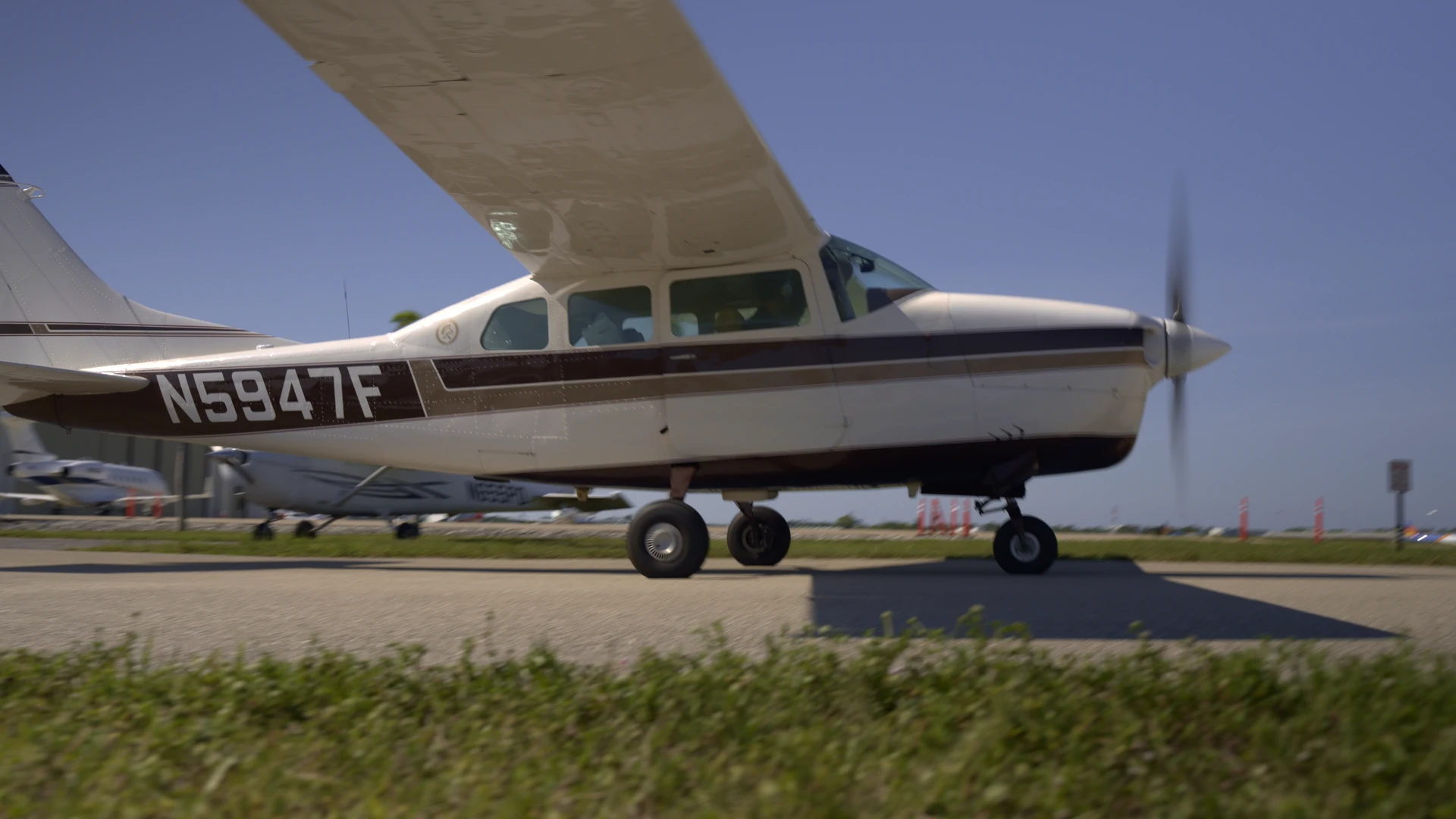
Under FAA rules, the pilot in command is responsible for deciding whether the aircraft is in condition for safe flight. You can look over training aircraft such as our Piper Cherokee, Archer, and Cessna 172s on our fleet page before your first lesson.
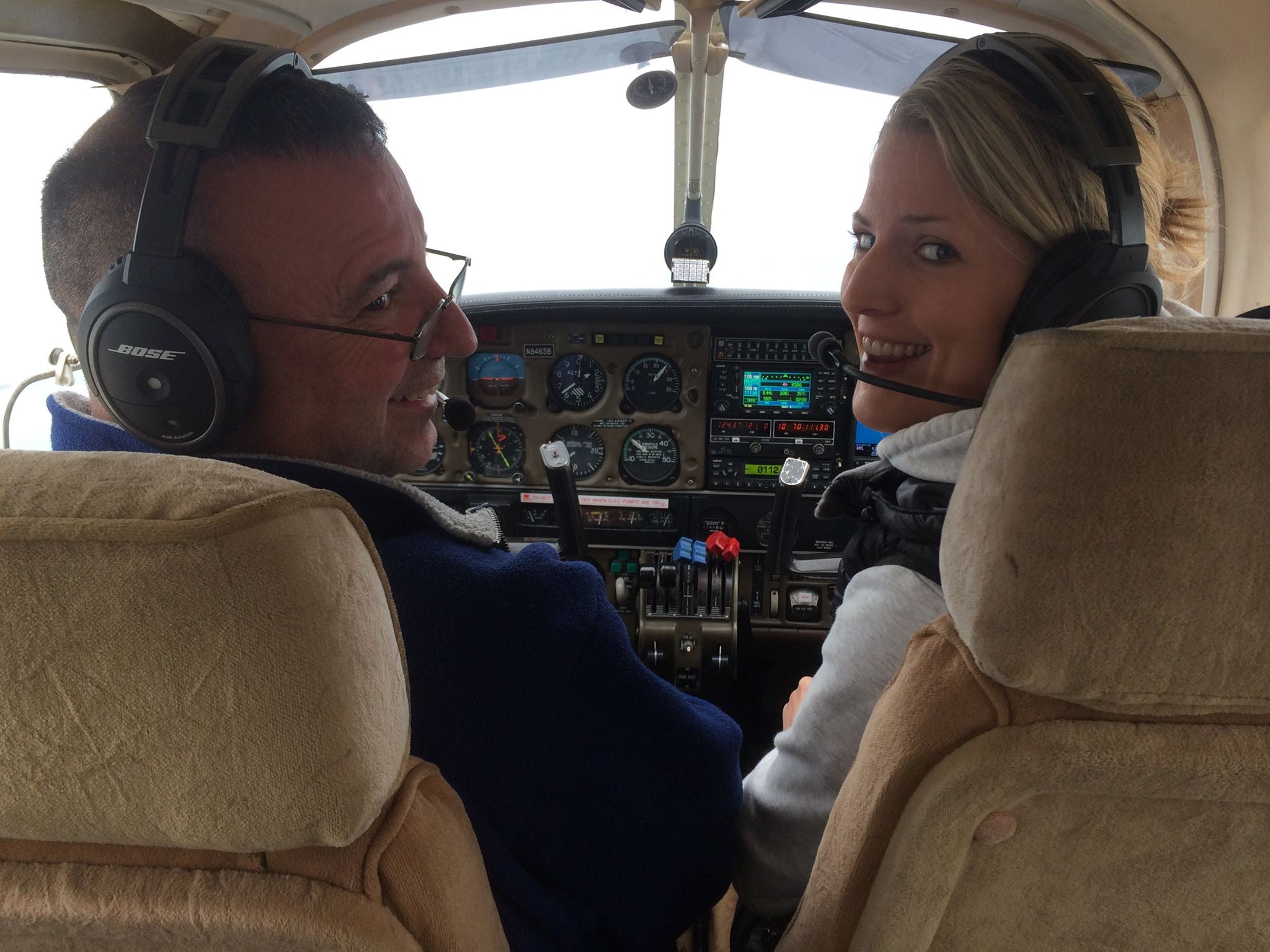
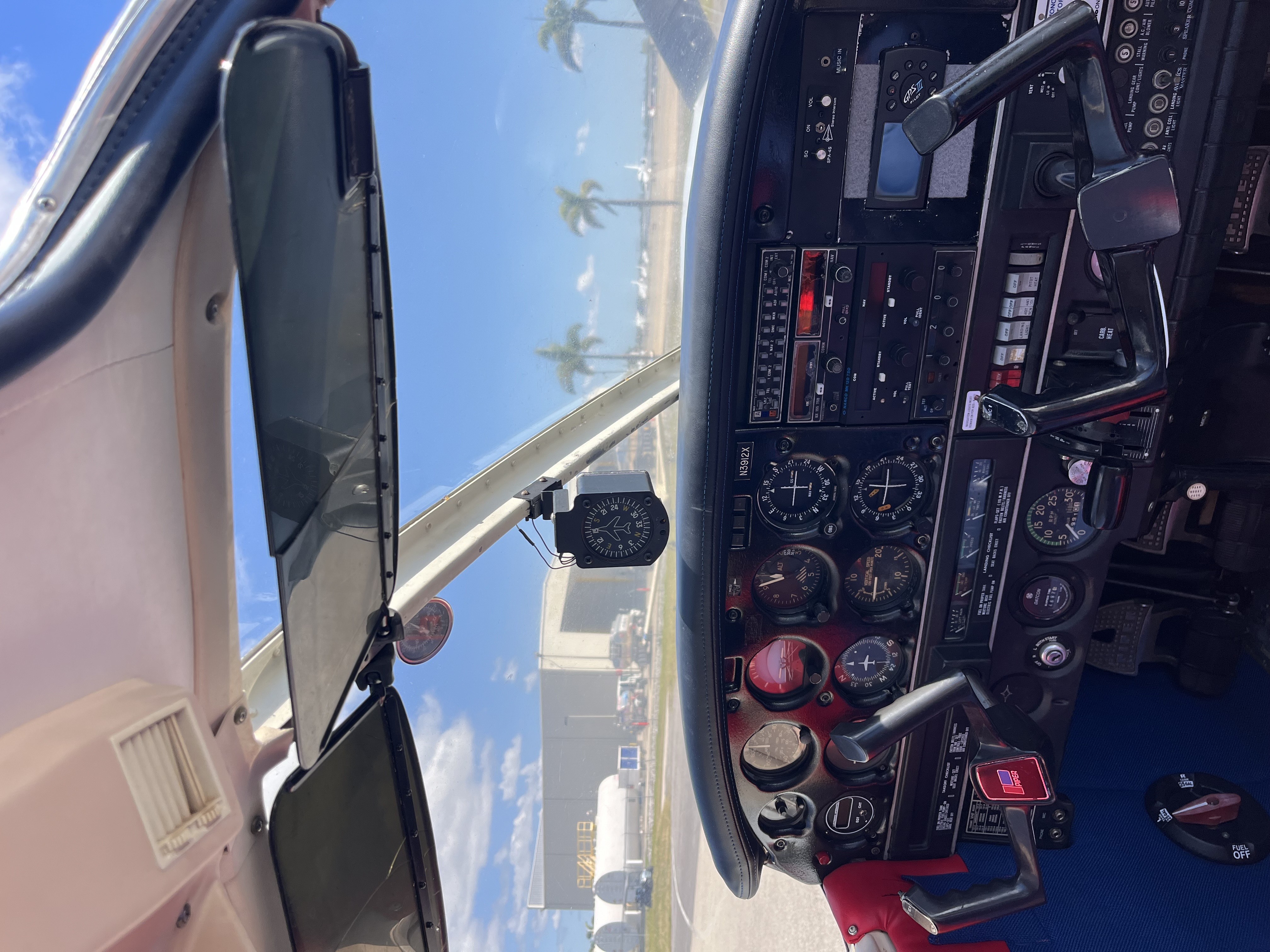
Each lesson starts with a briefing so you know exactly what you will practice in the air.
The four fundamentals come first in the air
Once you are airborne, early lessons center on four basic maneuvers: straight-and-level flight, climbs, descents, and turns. Nearly everything else you will fly is built from them.
You will practice setting pitch and power, watching the horizon, and trimming the airplane so it holds what you set. With the Gulf coastline as your backdrop, holding a heading and altitude slowly becomes something you feel.
These maneuvers also start your progress on the FAA’s pre-solo list. Under 14 CFR 61.87, student pilots must receive and log training in items such as straight-and-level flight, turns, climbs, descents, slow flight, stalls, traffic patterns, and takeoffs and landings before solo. Your first month starts checking those boxes. Each lesson is logged as training once your instructor signs your logbook, so your logbook grows from lesson one.
By the third week, many students move into slow flight and early stall work, which teaches how the airplane behaves at the low airspeeds used for takeoffs and landings. Your instructor demonstrates first.
SRQ tower turns radio work into a skill you practice early
Training at a towered airport means you share the field with airline and business traffic and talk with air traffic control on every flight. For many new students, the radio is the most intimidating part of the first month, until the calls start to feel routine.
Your instructor handles the radios until you are ready. At first you listen while the ground controller gives taxi instructions and the tower clears your airplane for takeoff. Then you start making some of the calls yourself, often beginning with the request to taxi, while your instructor backs you up.
A simple way to speed this up is to rehearse your calls on the ground. Write out what you will say to ground and tower, and say it out loud before the lesson.
Private pilot applicants need takeoffs and landings at an airport with an operating control tower, and here at SRQ that experience is part of a normal training day. Our page on flight training in Sarasota covers more of what learning at SRQ looks like.
Pattern work and landings start to fill the second half of the month
As your control improves, your instructor brings you back toward the airport. The traffic pattern is the rectangular path airplanes fly around a runway to land in an orderly way, with the tower sequencing you among other traffic.
Pattern work packs a lot into a short loop: airspeed control, radio calls, checklist flow, and the landing itself. Early landings are usually a team effort, with your instructor on the controls with you. Landing well takes many lessons, and your first month is the start.
The climbs, descents, and turns you practiced at altitude become the pieces of every approach. A consistent pattern puts you on the path toward solo, which our guide to your first solo flight covers.

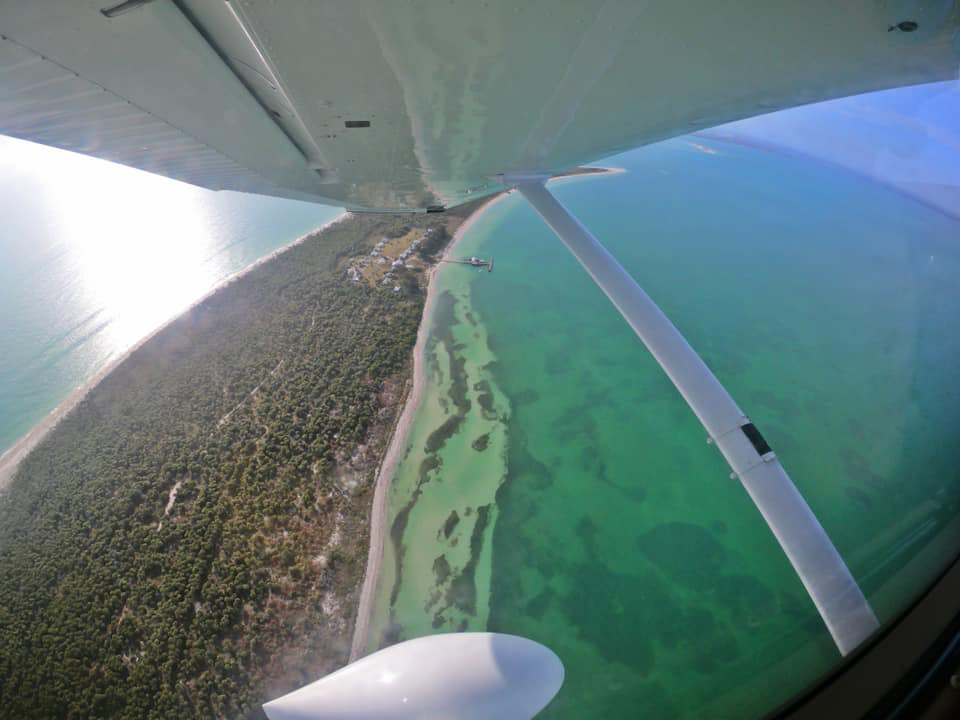
Early maneuvers often happen with the Gulf Coast below before you head back to SRQ for pattern work.
The debrief is where each lesson gets locked in
After you shut down and secure the airplane, you sit down with your instructor for a debrief to go over what went well, what needs more work, and what to focus on next time.
Many students rush this part, though it is one of the most useful parts of the lesson. Bring a notebook and write down one thing you did well and one thing to improve.
Use the debrief to plan what to study before your next flight. If a radio call tripped you up, script it out. Students who use the time between lessons well start each flight further along, as our tips on saving money and time during flight training explain.
Ground study runs alongside the flying from week one
Flight training has a knowledge side that starts right away. Before solo, your instructor gives you a knowledge test on rules in Parts 61 and 91, the airspace and procedures at your solo airport, and your airplane’s flight characteristics and limitations. Starting early means you are not cramming later.
Our Private Pilot Course includes 10 hours of ground instruction on topics like airspace, weather, navigation, and aircraft systems. We have also offered in-person Private Pilot ground school at our SRQ training facility. Contact us for the next start date, since a ground school class pairs well with your first month of flying.
When you are ready for the FAA knowledge test later in training, you can take it right here at our on-site FAA testing center. Our guide on what to expect on your FAA written exam is a good preview.
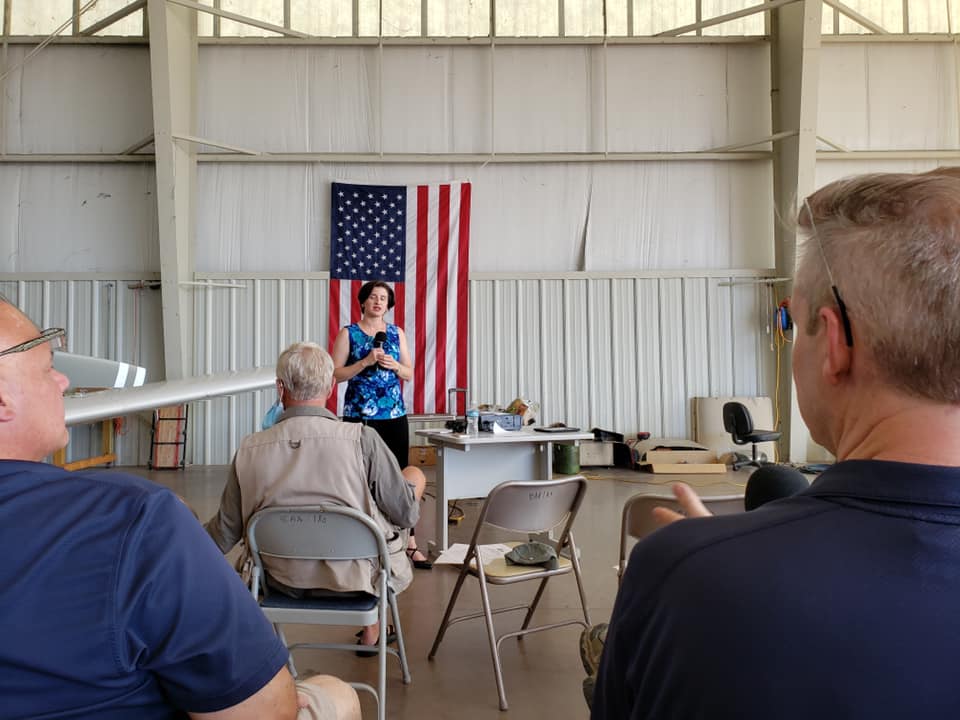
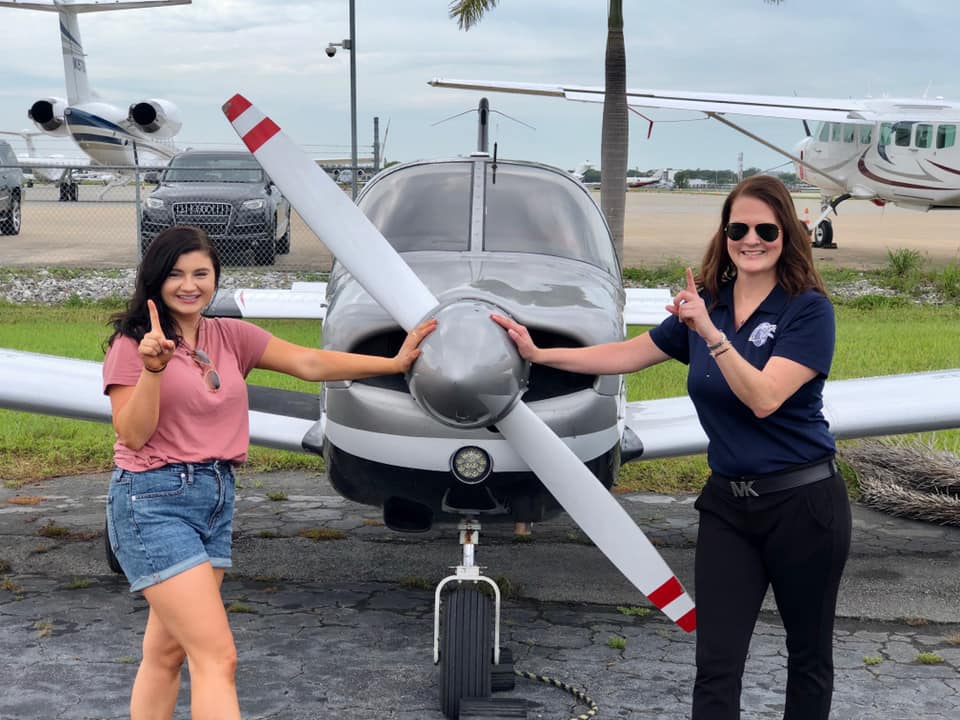
Ground study alongside your lessons makes each flight easier to understand.
Florida weather shapes your first month, and you can plan for it
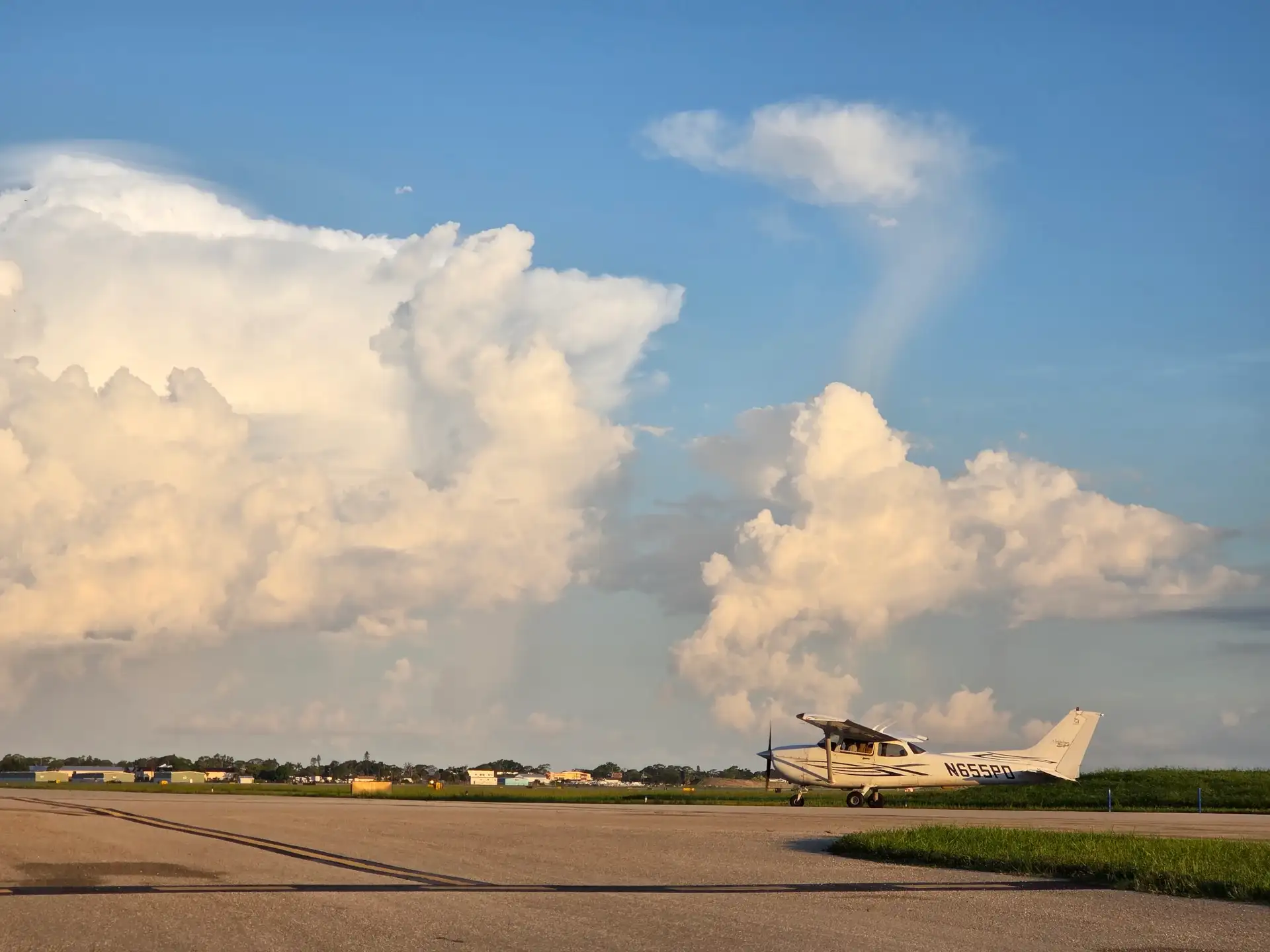
Florida lets you fly most of the year, but summer afternoons often bring thunderstorms. Many of our students book morning lessons in the warmer months for that reason. Weather can still move a lesson, so build a little flexibility into your calendar.
When a storm rolls in, our Virtual Fly Solo Pro G1 simulator is available day or night with no weather cancellations, so you can rehearse checklists, radio flows, and procedures on the ground. Learn more on our simulator page.
Budgeting before your first month helps keep your training steady. We partner with Stratus Financial and Flight Training Finance, and you can review your financing options before you enroll. Eligibility and terms come from the provider.
FAQ
Do I need a medical or student pilot certificate before my first lessons?
No. You can fly lessons with an instructor without either one. You will need both before solo, so start early. Our flight school FAQs and our guide to FAA medical certificate classes and BasicMed explain the details.
What should I bring to my first few lessons?
Bring your logbook, a notebook, and comfortable closed-toe shoes. Sunglasses help on a bright Florida day. Your instructor will tell you about any training materials for the Private Pilot Course.
Will I land the airplane in my first month?
Most students start landing practice once pattern work begins, usually with the instructor helping on the controls. Your instructor decides when you are ready, based on your progress in the Private Pilot Course.
Is this the same as a discovery flight?
A first lesson starts a planned sequence, while a discovery flight helps you decide whether flying is for you. Our comparison of discovery flights and first flight lessons explains the difference.
Start your first month with a plan
Your first month of flying lessons in Sarasota is a set of skills you can prepare for: a careful preflight, the four fundamentals, radio calls with SRQ tower, early pattern work, and a debrief after each flight.
If you are ready to begin, enroll with Universal Flight Training and our team will build your training plan around your schedule and goals, starting with lesson one on our ramp at SRQ.