Ground School in Sarasota: In-Person vs. Online in 2026
Published by
Jacob Kyser
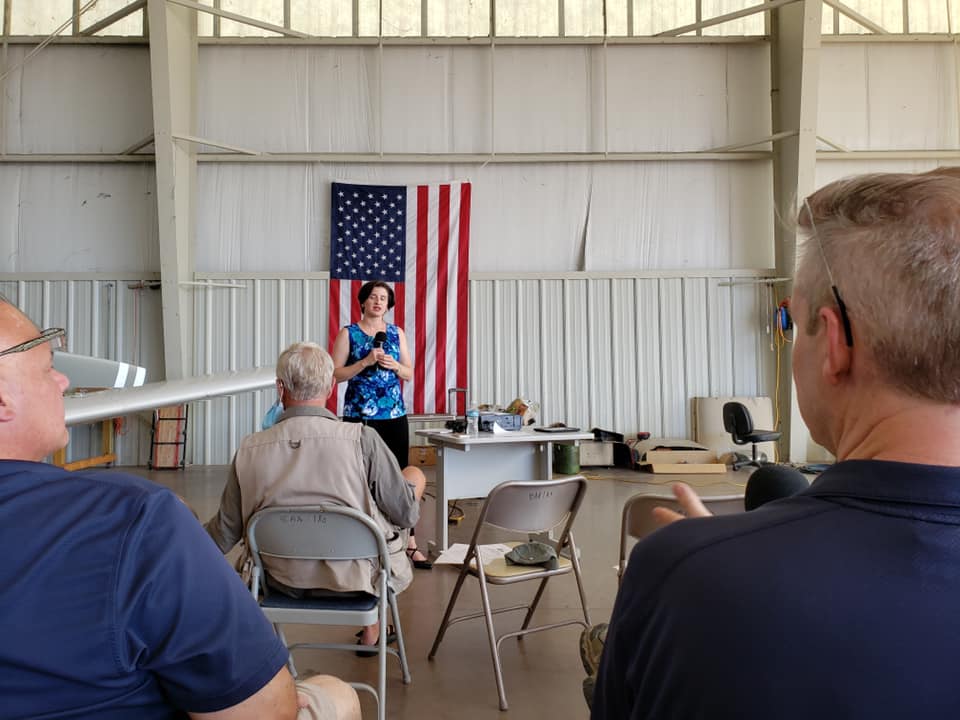
Picture two new student pilots in Sarasota. One spends a Saturday morning at a table at Sarasota Bradenton International Airport, a sectional chart spread out, airplanes taxiing past the window. The other opens a laptop at 11 p.m. after work and pauses a video on airspace for the third time. Both are doing ground school, and both are working toward the same signature from an instructor before they can take the FAA knowledge test.
The short answer: in-person ground school suits students who want a fixed schedule and a group to keep them moving, self-paced online study suits students with unpredictable weeks and strong self-discipline, and one-on-one ground instruction with a flight instructor suits students who want lessons tailored to them. Here at Universal Flight Training, we see each one work when it fits the student. This guide helps you choose the right ground school in Sarasota before you spend time or money on the wrong one.
Every format leads to the same instructor endorsement
Under the FAA’s Part 61 rules, a private pilot applicant has two ways to cover the ground knowledge. You can receive and log ground training from an authorized instructor, or you can complete a home-study course on the same knowledge areas. An authorized instructor is a certificated ground instructor or flight instructor. Classroom ground school and one-on-one sessions fall under the first route. A self-paced online course is a home-study course.
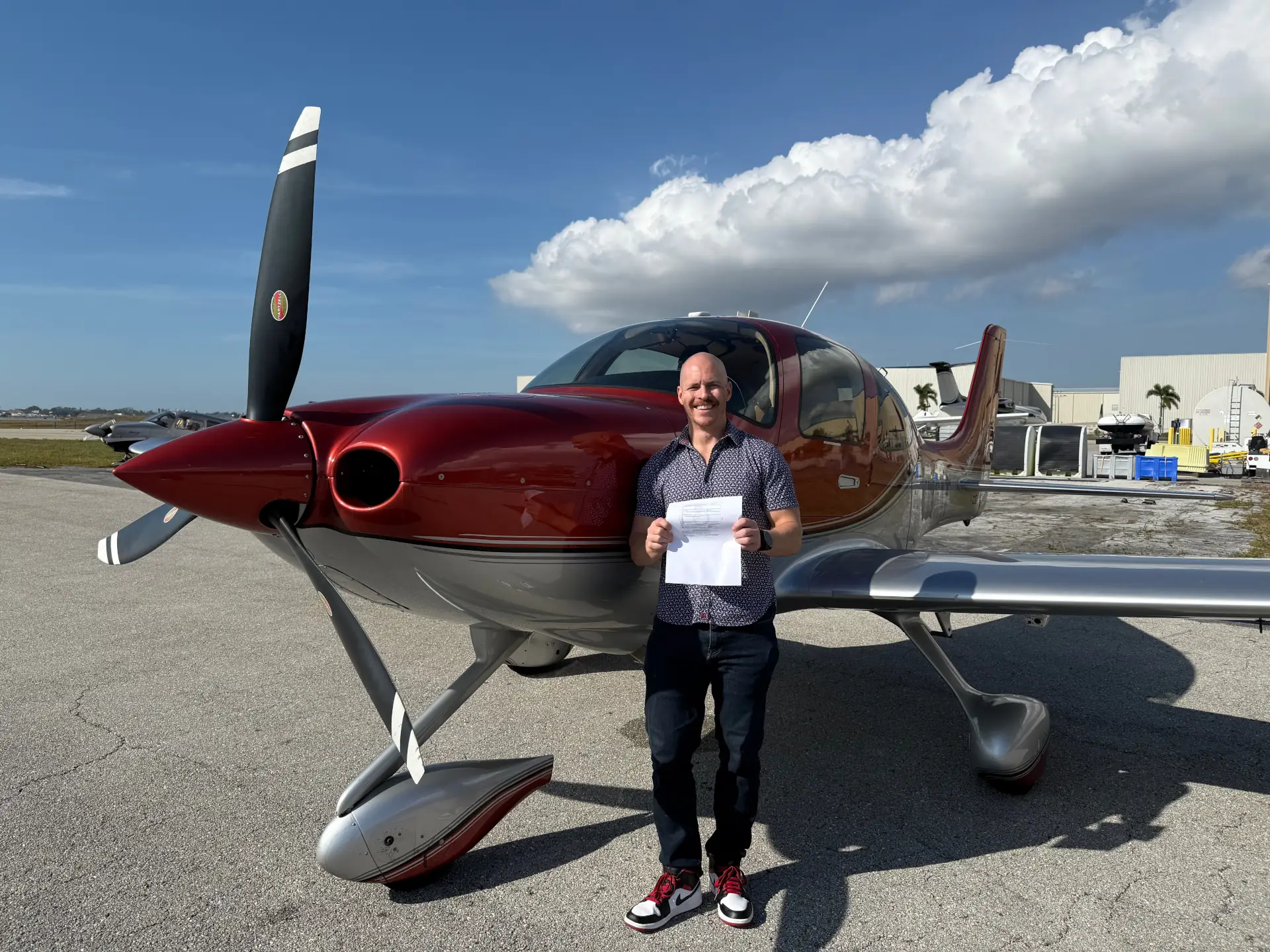
Whichever route you take, an authorized instructor has to sign an endorsement saying you completed the ground training or home-study course and are prepared for the test before you can sit the knowledge test. That endorsement is the finish line for ground school, and it is the same signature whether you studied in a classroom or on your couch. When you are ready, you can take the test right here at our on-site FAA testing center.
The topics are the same in every format too. The FAA’s private pilot knowledge areas include regulations, VFR charts and navigation, radio procedures, weather, density altitude, weight and balance, aerodynamics and aircraft systems, stall and spin awareness, and aeronautical decision making. If you want a sense of what happens once you sit down for the test, our guide on what to expect on your FAA written exam walks through it.
How the three ground school formats compare
Each format trades flexibility for structure in its own way, so compare them against your week and your study habits.
| In-person classroom | Self-paced online | One-on-one with a CFI | |
|---|---|---|---|
| Structure | Fixed class schedule and a set order of topics | You set the order and pace | Your instructor builds sessions around you |
| Accountability | Instructor and classmates expect you each week | Comes from you | High, since your instructor tracks your progress |
| Main cost driver | The class itself | A course purchase or subscription | Instructor time for each session |
| Schedule fit | Best if the class day stays open for you | Best for shifting work hours | Can be booked around your lessons |
| Questions answered | Live, in class | Usually later, or saved for your instructor | Live, on the spot |
| Endorsement path | Your instructor signs when you are prepared | Course work reviewed, then endorsed | Your instructor signs when you are prepared |
No single column wins for everyone, because the right choice comes down to how you learn and how your week runs. Ground study for our Private Pilot Course can follow any of these routes, and our instructors help you connect it to your flying.
When in-person ground school keeps you moving
A classroom gives you a rhythm you don’t have to create yourself. The class meets, the topic is set, and an instructor is at the front of the room ready to explain why a weather report matters or how a chart symbol reads. If you tend to put off studying when nobody is waiting on you, that structure is worth a lot.
You also learn from the questions other students ask. Someone else may ask about the radio call you were too shy to bring up, and you hear the answer along with everyone else. Hearing a big subject like airspace explained a few different ways can make it feel more manageable.
Here at UFT, we have offered in-person Private Pilot ground school on Saturdays at our SRQ training facility, taught by our flight instructors and built to prepare you for the FAA Private Pilot Knowledge Test. Our instrument students get classroom sessions too, through our Instrument Rating program. Contact us for the next ground school start date.
The tradeoff is the fixed schedule. If your work shifts change from week to week, missing classes can leave gaps you have to fill on your own.
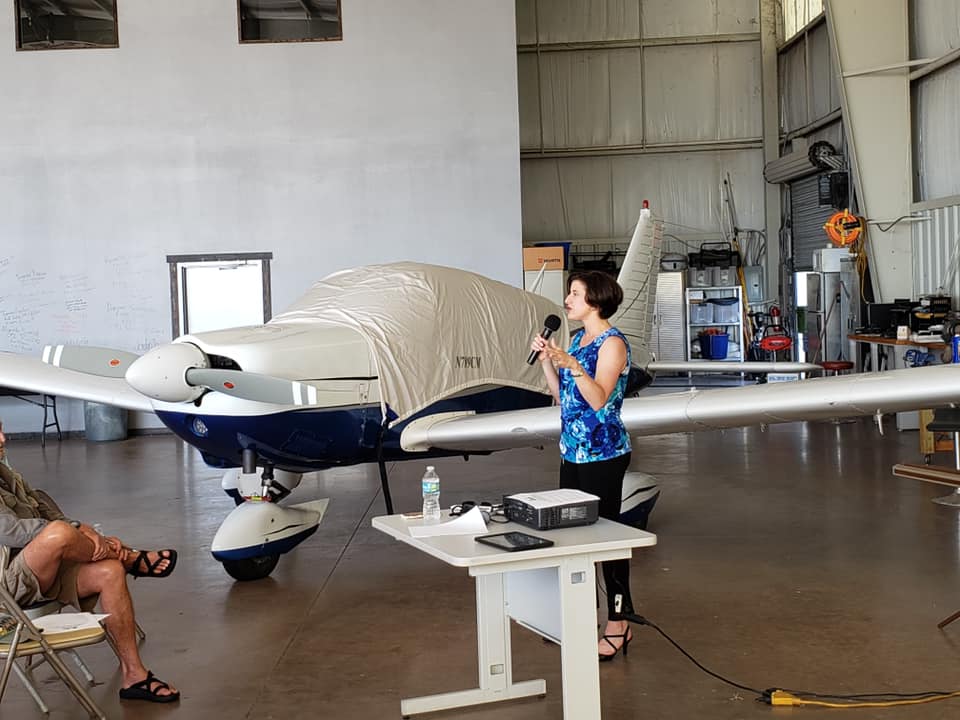
A classroom session gives you a set time, a set topic, and live answers.
When self-paced online study fits your week
Online courses fit around unpredictable schedules. You can study before work, at lunch, or late at night, and you can replay a lesson on weight and balance as many times as you need. Most online courses use video lessons and practice questions, and they are usually a one-time purchase or a subscription, with prices that vary by provider.
The risk is momentum, because nobody notices if you skip a week. Students who do well online usually set a fixed study time and treat it like a lesson on the calendar.
Check how your online course handles the endorsement. Your own instructor can review your completed course work and sign the endorsement once you are prepared. Bring your questions to each lesson so the online material and the cockpit stay connected. If you are planning how study fits around flying, our guide to your first month of flying lessons in Sarasota shows how ground study runs alongside your early lessons.
When one-on-one ground instruction is worth it
One-on-one ground instruction with a certificated flight instructor (CFI) goes straight to the topics you find hardest. If density altitude finally makes sense but airspace still doesn’t, your session can spend its whole time on airspace. You get answers on the spot, and your instructor already knows where you are in your flight training.
It works well as a supplement. Many students pair a classroom course or an online course with a few focused sessions on weak spots. After a lesson where a tower instruction confused you, a quick whiteboard sketch at the debrief table can clear it up while the flight is still fresh.
The cost driver is instructor time, since you are paying for an instructor’s undivided attention. Coming to each session with your questions ready keeps that time productive. For a feel of how instructor time adds into lesson costs, see our breakdown of what one flying lesson costs in Sarasota. Contact us for current ground instruction rates.
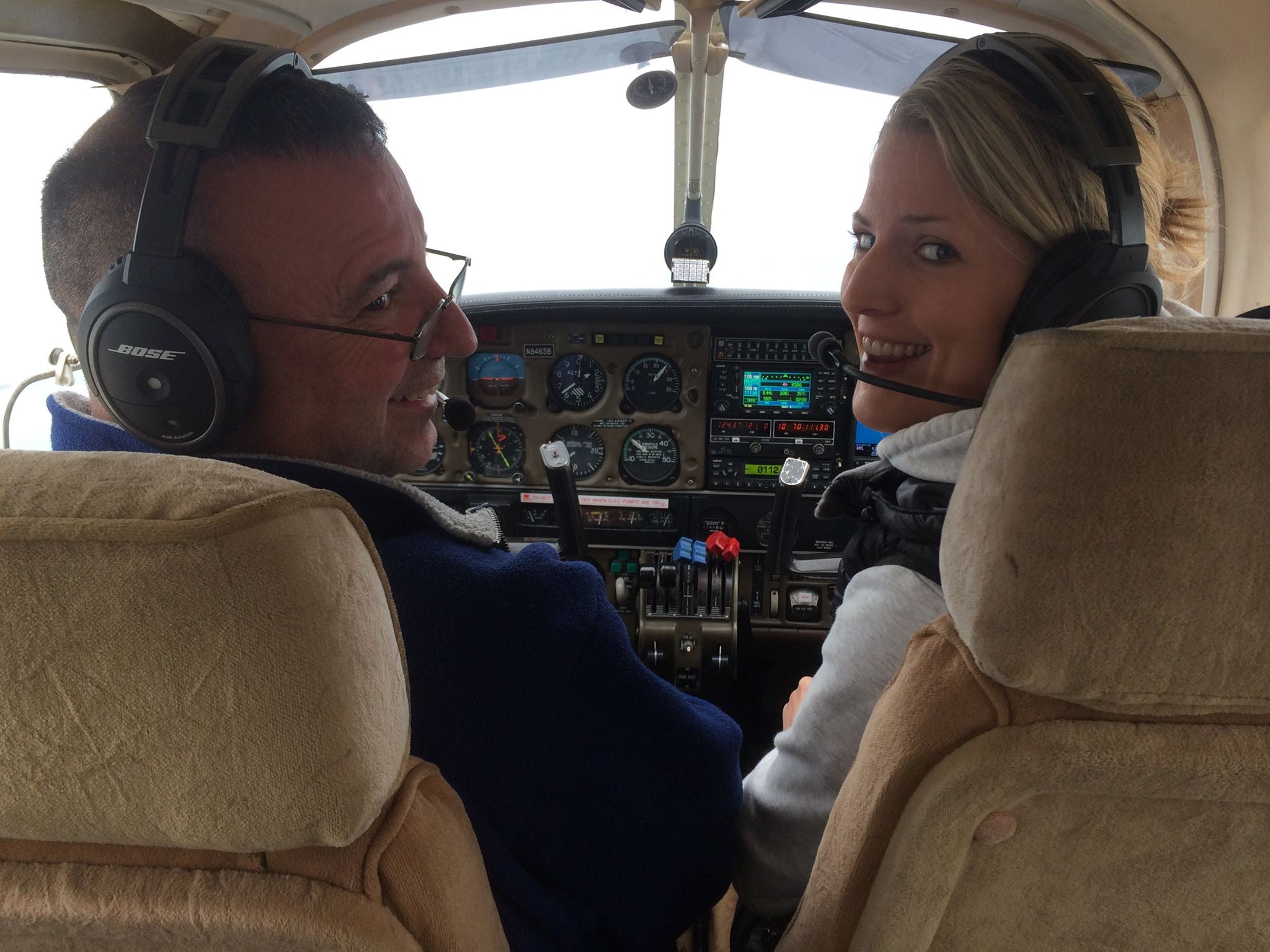
One-on-one time with your instructor can focus on the exact topic that gave you trouble.
How ground study connects to your flight lessons
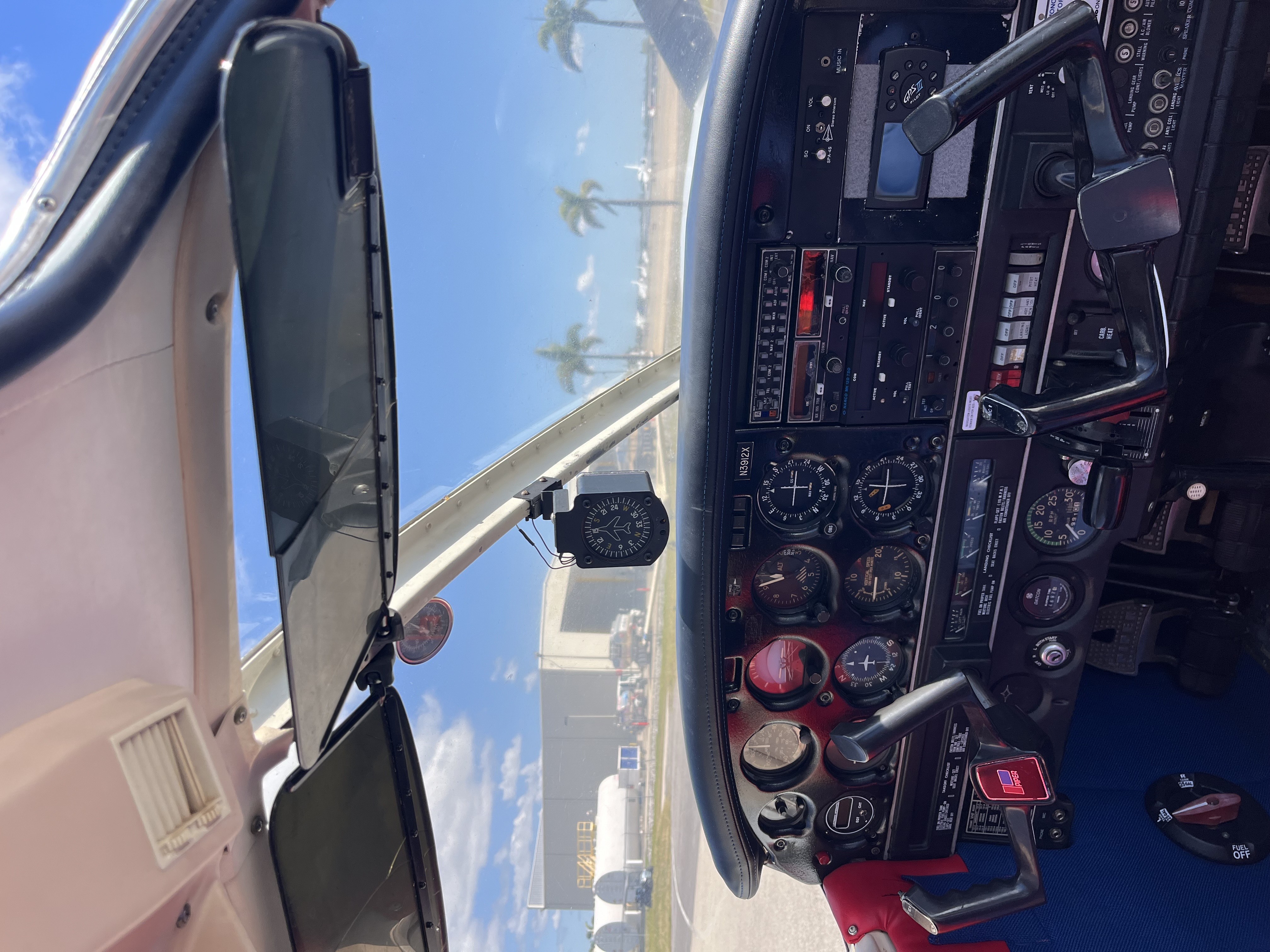
You can start flight lessons before you pass the knowledge test, and seeing ideas in the airplane makes the book material easier to remember. When you study VFR charts on Tuesday and then fly over Sarasota Bay on Thursday, the chart symbols suddenly match what you see out the window. Our guide to routes and practice areas around Sarasota shows the kind of flying your chart study prepares you for.
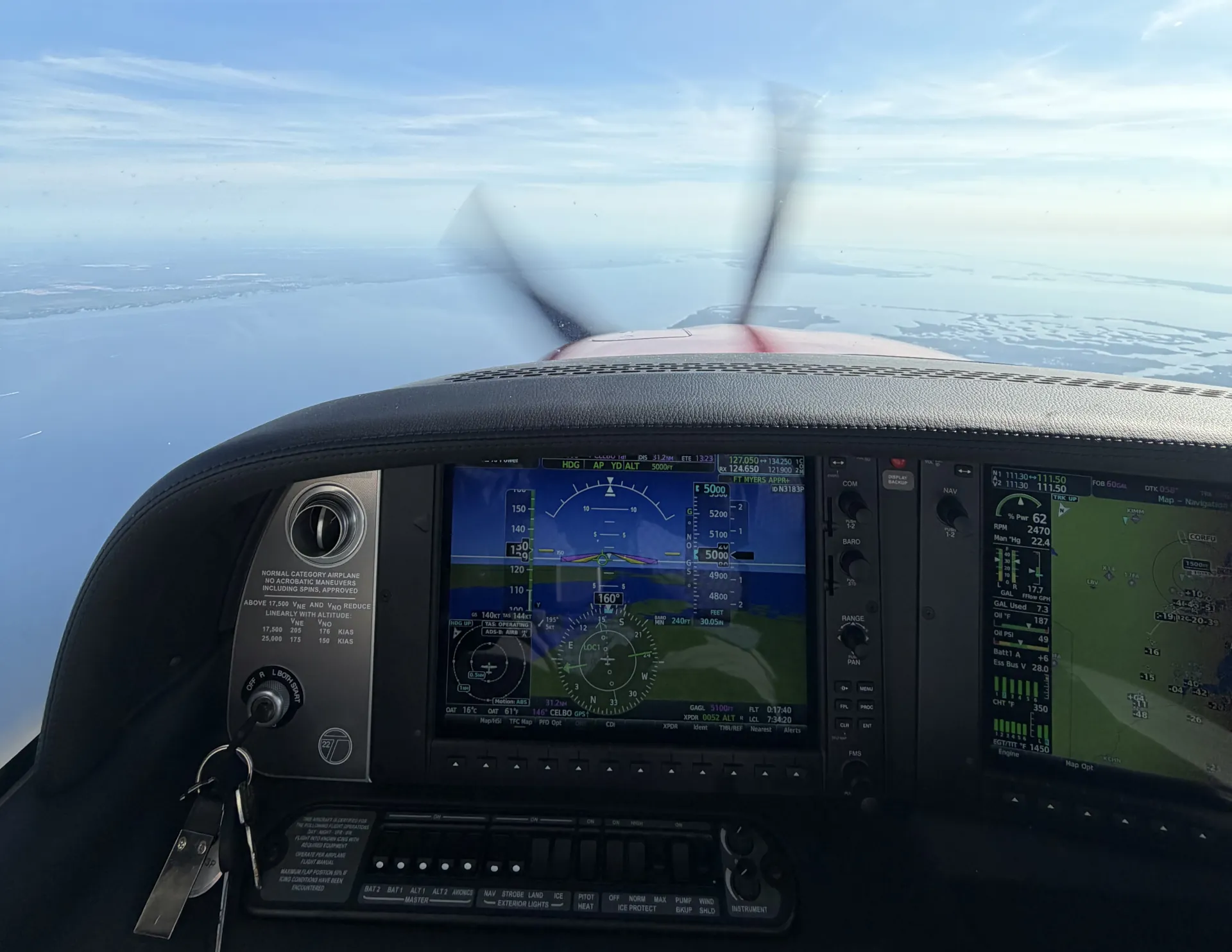
Chart study starts to click when the shoreline below matches the map in your lap.
Timing still matters. Under the FAA rules, you must pass the knowledge test within the 24 calendar months before the month you complete your practical test, also called the checkride. Before the checkride, your instructor also signs an endorsement saying you have shown satisfactory knowledge of the subject areas you missed on the knowledge test.
Here at UFT, our Private Pilot Course includes 10 hours of ground instruction on topics like airspace, weather, navigation, and aircraft systems, along with test preparation materials and practice exams. If you are budgeting for training as a whole, we partner with Stratus Financial and Flight Training Finance, and financing options may be available to qualified applicants. Learn more on our financing page.
Which ground school format fits your situation
Start from your own week and learning style, then match it to a format.
- You work full time with a steady weekend
An in-person class gives you structure without crowding your weekdays. Pair it with flight lessons when you can, and see our Private Pilot Course for how it all fits. - Your schedule changes every week
A self-paced online course lets you study when you can, with your instructor reviewing your progress at lessons. - You learn best by talking it through
One-on-one ground instruction lets you ask every question as it comes up. - You want quick feedback on weak areas
Combine any course with a few one-on-one sessions targeted at the topics you miss. - You are a parent helping a teen plan training
A classroom gives your student a set routine and a room full of people learning the same material.
Whatever you choose, tell your instructor early. We can line up your flight lessons so the topics you study and the maneuvers you fly support each other.
FAQ
Is online ground school accepted for a private pilot certificate?
Yes, a home-study course is one of the two routes the FAA allows for private pilot ground knowledge. You still need an authorized instructor’s endorsement before you take the knowledge test. You can take that test at our on-site testing center.
Do I need ground school before my first flight lesson?
No. You can start flying and studying at the same time, and most students find that each one makes the other easier. A discovery flight is a good first look at the airplane before you commit.
Can I mix formats?
Yes, and many students do. A common mix is a classroom or online course for the full set of topics, plus one-on-one time with your instructor for the areas that need more work.
Who signs my knowledge test endorsement?
An authorized instructor, meaning a certificated ground instructor or flight instructor, signs it once you have completed the ground training or home-study course and are prepared. Our guide on the FAA written exam covers what happens next.
Does UFT offer ground school for the instrument rating too?
Yes. Our Instrument Rating program includes classroom sessions along with an Instrument Pilot Kit.
Find the next ground school start date at SRQ
Pick the format you will keep showing up for week after week, alongside your flight lessons. Our flight instructors can help you pick a format and build a plan that ties your study to your time in the airplane here at SRQ. Contact us for the next ground school start date, or call our team at (941) 300-0309 to talk through which option fits your schedule.