
How Many Flight Lessons Per Week Should You Schedule?
Published by:
Jacob Kyser
For many students, at least two to three flight lessons per week is the strongest starting target. That pace usually keeps skills fresh, gives you time for ground study, and leaves room for weather or schedule changes without losing momentum.
One lesson per week can still work, especially if you are training around work, school, or family. The tradeoff is that more of each lesson may be spent rebuilding what felt comfortable last time. At Universal Flight Training, we help students in Sarasota build a schedule around their aviation goals, life constraints, and training pace.

A steady lesson rhythm helps each flight build on the last one.
The best weekly pace keeps your skills warm
Flight training rewards repetition. When you come back after a few days, the checklist flow, radio calls, sight picture, and aircraft control usually return faster. Longer gaps can turn the first part of the lesson into review before new progress starts.
That is why two to three lessons per week works well for many students. It gives you enough cockpit time to build muscle memory while still leaving space to read, chair-fly procedures, review notes, and prepare questions for your instructor.
If you are starting with the Private Pilot Course, the goal reaches beyond logging hours. You are learning how to plan, brief, fly, communicate, evaluate weather, manage workload, and make safe decisions. A consistent schedule helps those skills connect.
FAA minimum hours set the regulatory floor. Your actual pace depends on proficiency, preparation, weather, aircraft availability, instructor availability, checkride timing, and how often you can train with focus.
Use this table to choose a realistic starting rhythm
Every student needs a repeatable schedule, the question is: what pace can you sustain while staying prepared and available?
| Lesson pace | Best fit | Nuances |
|---|---|---|
| 1 lesson per week | Busy local students, recreational goals, cautious budget planning | More review time between lessons; slower momentum |
| 2 lessons per week | Many part-time students who want steady progress | Weather or one cancellation can still thin the week |
| 3 lessons per week | Career-minded students or students with a flexible schedule | Requires more budget and study discipline |
| 4+ lessons per week | Short-term push, accelerated windows, or students with strong availability | Fatigue, budget pressure, and ground-study gaps can catch up quickly |
The right answer may change. A student might train twice per week while building landings, add a third slot before a checkride, or slow down temporarily during a demanding work season. Good training plans adjust without letting the whole goal drift.
Budget for the full training week
Your weekly pace affects cost in a more nuanced way than “more lessons equals cheaper training.” Consistency can reduce wasted review, while a heavy schedule only helps when you can afford it, prepare for it, and show up rested enough to learn.
Flight training costs can include aircraft rental, instructor time, ground instruction, supplies, test fees, examiner fees, medical exam costs, and extra training if a maneuver or knowledge area needs more work. If you are comparing schools or building a family budget, look beyond the hourly aircraft rate and ask how the whole training week will work.
We can help you think through current training options, aircraft choices, and next steps. Financing options may be available to qualified applicants; approval and terms come from the lender. The TL;DR is that your schedule should fit both your aviation goal and your financial comfort level.
Ground study decides how much each flight gives back
The students who get the most from frequent flying usually do more than show up at the ramp. They study the lesson before the flight, review the maneuver or procedure afterward, and bring better questions into the next briefing.
That matters because cockpit time works best when the basic concepts are already familiar. Ground preparation helps you understand what your instructor is asking for, why the maneuver matters, and how the lesson connects to the next stage of training.
For private pilot students, that may mean reviewing airspace, weather, airport signs, radio calls, or aircraft systems before a lesson. For an instrument student, it may mean chair-flying an approach or using the simulator to slow a procedure down before flying it in the airplane.
A good weekly schedule includes study blocks alongside flight blocks. Two prepared lessons can be more productive than four rushed lessons where you arrive behind before the engine starts.
Weather and cancellations are part of the plan
In Florida, your calendar needs some flexibility. Weather, maintenance decisions, aircraft scheduling, instructor availability, and personal obligations can all move a lesson. A buffered plan keeps training steady when a week changes.
If your goal is to fly twice per week, you may want to hold three possible windows on your calendar when life allows it. If one flight cancels, you still have a chance to keep the week alive. When the weather changes the plan, use the time for ground instruction, simulator practice, oral-exam prep, or reviewing your last lesson notes.
Training at Sarasota Bradenton International Airport also puts radio communication, taxi planning, and controlled-airspace routines into your normal training day. Those useful skills still require steady repetition. A practical schedule gives you enough exposure to build confidence without rushing the learning.
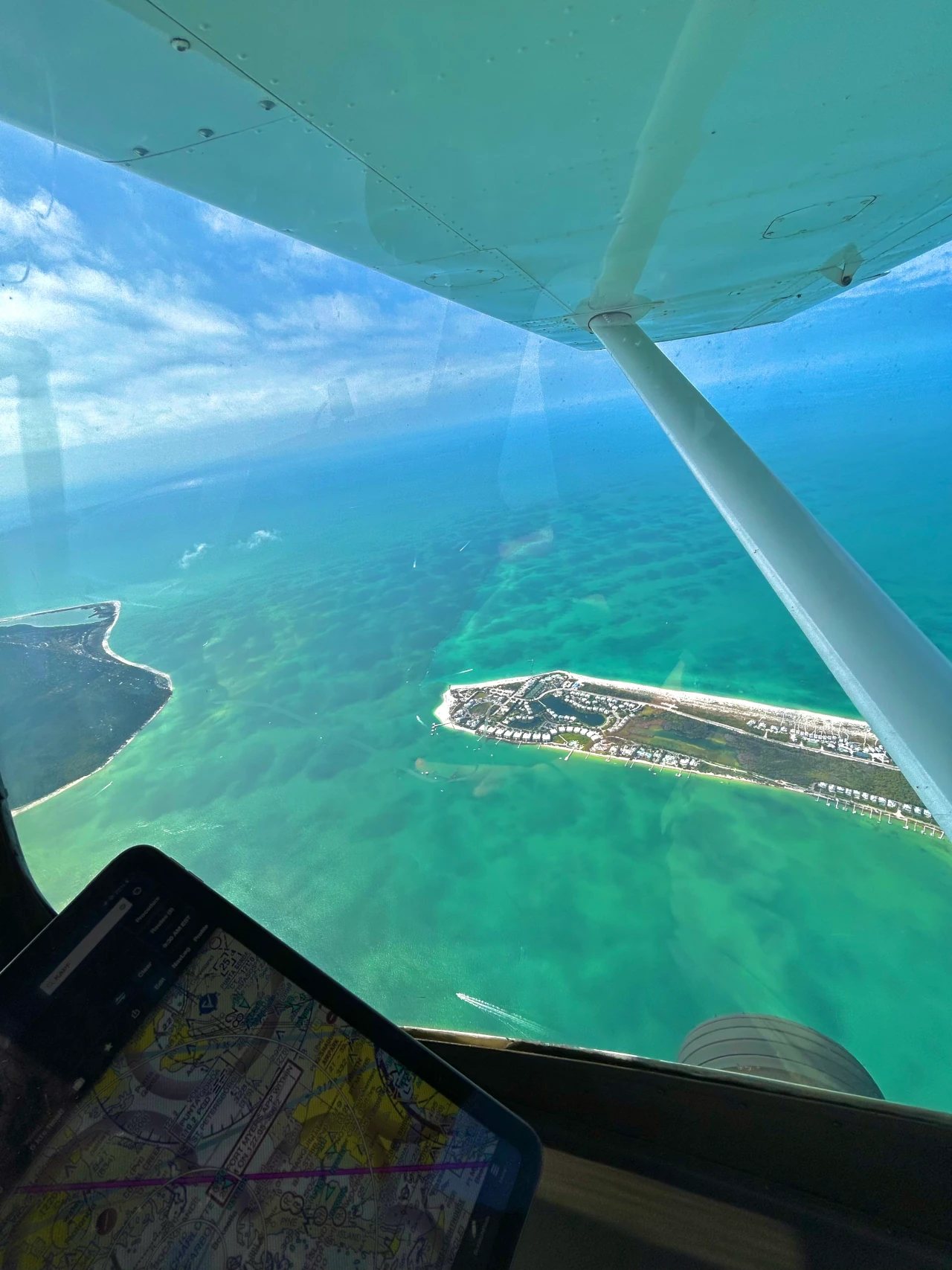
Radio work, checklist habits, and cockpit flow improve with steady practice.
A first-time student should start with a schedule they can repeat
If you are new to aviation, start by asking three questions:
- How many days per week can I train without sacrificing preparation?
- How much can I budget each month without creating pressure to rush?
- What is my goal: recreational flying, a career path, or testing whether aviation fits?
For a student who wants to move steadily, two lessons per week is often a realistic baseline. If your schedule and budget allow it, three lessons per week can add momentum. If you can only fly once per week, make the time between lessons count with review, ground study, and a clear plan for the next flight.
Your first lesson can come before the full aviation plan is clear. A discovery flight can help you feel the cockpit, meet the training environment, and decide whether a larger commitment makes sense.
FAQ: flight lesson frequency
Is one flight lesson per week enough?
One lesson per week can be enough for some students, especially recreational students or people with tight schedules. Plan for slower progress and more review between lessons. If you choose this pace, protect your study time so each flight starts with a clear objective.
Is three flight lessons per week too much?
Three lessons per week can work well for motivated students who have the budget, schedule, and study discipline to support it. It becomes too much when you arrive tired, unprepared, or unable to review what happened between flights.
Should I schedule lessons on back-to-back days?
Back-to-back lessons can help during a focused training push. Many students also benefit from a day between flights to review notes, study weak areas, and come back with sharper questions.
How does lesson frequency affect flight training cost?
Consistency can help reduce repeated review. Cost still varies by proficiency, aircraft and instructor time, weather, supplies, testing, checkride scheduling, and extra training needs. Build a budget with room for more than FAA minimum hours.
Can simulator time replace airplane lessons?
Simulator sessions can be useful for procedures, repetition, and instructor-guided review, especially for instrument concepts. Whether simulator time can count toward a specific requirement depends on the certificate or rating, device approval, and how the session is used.
When should I talk to the school about my schedule?
Talk with our team before you commit to a pace. We can help you compare your goals, availability, current training options, and budget so your plan is realistic from the beginning. Fill out the enrollment form when you are ready to map your first month.
Build a training schedule before momentum slips
The best weekly pace is the one that keeps you learning, prepared, and financially steady. For many students, that means starting with two to three flight lessons per week, then adjusting as your skills, schedule, and goals become clearer.
If you are ready to plan your first month of training, enroll with Universal Flight Training and we will help you create a flight training path from where you are today.