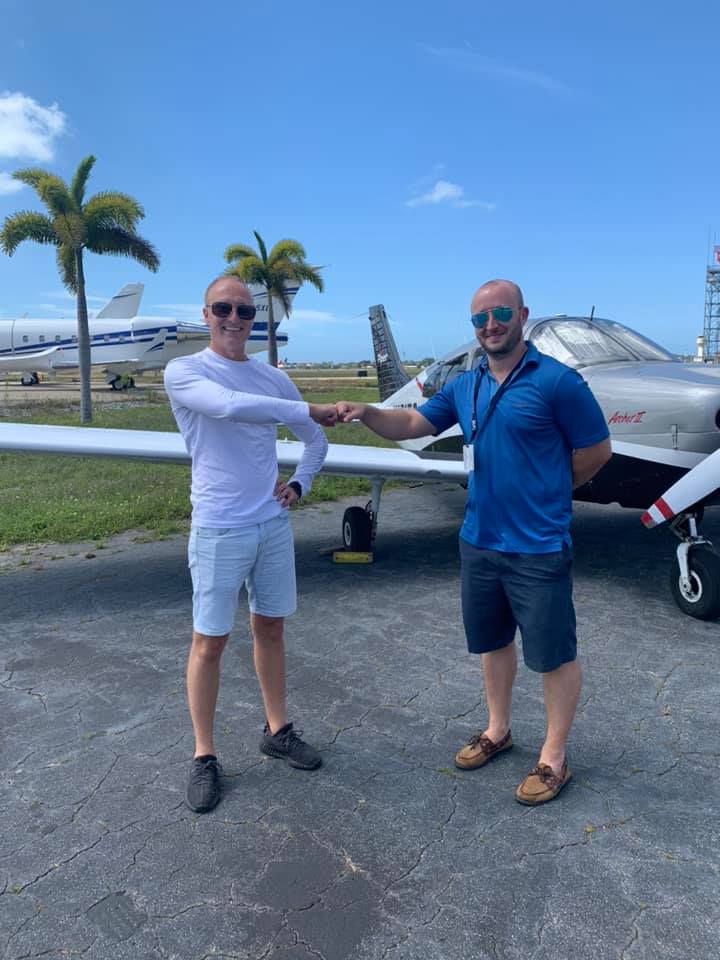
First, Second, or Third Class Medical? Which FAA Medical You Need
Published by:
Joe Vasquez
Your instructor has been flying the pattern with you for a few weeks. The landings are getting smoother, and one afternoon after the debrief they ask a simple question: “Do you have your medical yet?” For a lot of students, that is the first time the FAA medical certificate feels real, and the paperwork suddenly stands between you and your first solo.
Here is the short answer. Most airplane students need at least a third-class medical before they fly solo. Commercial pilot privileges require at least a second-class medical, and acting as captain on an airline transport pilot (ATP) certificate requires a first-class medical. BasicMed is a real alternative for many private pilots, but it only opens up to pilots who have already held an FAA medical at some point after July 14, 2006.
Here at Universal Flight Training, we would rather you sort this out early than discover a medical question after you have invested months of lessons. This guide walks through which class fits your goal, how long each one lasts, how the exam works, and where BasicMed and sport pilot rules come in. You can start lessons before any of it is in hand, and a discovery flight is a great way to begin while you plan.
Match the medical class to the flying you want to do
The FAA ties each medical class to the privileges you plan to exercise, not to how serious a student you are. You can apply for any class as long as you meet its standards, as explained in the FAA’s guide to medical classes.
| Medical class | Typical privileges it covers | Common UFT training path |
|---|---|---|
| First class | Acting as pilot in command with an ATP certificate, plus certain Part 121 airline roles | Career students planning ahead after Commercial Pilot Training |
| Second class | Commercial pilot privileges, such as flying for compensation or hire | Commercial Pilot Training and Multi-Engine Rating students heading into paid flying |
| Third class | Student, recreational, and private pilot privileges | Private Pilot Course and Instrument Rating students flying for personal reasons |
A higher class steps down over time. A first-class medical that no longer covers airline captain duties can still be valid for commercial or private flying, which we break down in the duration table below.
Get the medical in hand before your instructor mentions solo
You can take flight lessons without a medical certificate or a student pilot certificate. The FAA says so plainly in its student pilot certificate guidance. Those documents come into play when you are ready to fly the airplane alone.
For the usual airplane path, you need both a student pilot certificate and a medical before your first solo, and you carry both on every solo flight. To apply for the student pilot certificate, you must be at least 16 for airplanes and able to read, speak, and understand English. You apply through the FAA’s IACRA system with help from your instructor, and certificates issued after April 1, 2016, do not expire.
We encourage students to start the medical process early in training, well before solo is on the table. If a question comes up during the exam, you want time to gather records without your progress stalling. Our guide to what to expect on your first solo flight covers the rest of that milestone, and our post on how long a private pilot certificate takes shows how paperwork delays can stretch a timeline.

Ground school is a good time to line up your student pilot certificate and medical exam.
Know how long each medical lasts before you book the exam
Medical duration depends on your age on the exam date and the privileges you are using. The clock runs to the end of the last day of the month shown below, counted from the month of your exam.
| Medical class | Airline captain (ATP PIC) | Commercial privileges | Private, student, or instructor acting as PIC |
|---|---|---|---|
| First class, under 40 | 12 months | 12 months | 60 months |
| First class, 40 or older | 6 months | 12 months | 24 months |
| Second class, any age | Not valid for ATP PIC | 12 months | 60 months under 40, 24 months at 40+ |
| Third class, any age | Not valid for ATP PIC | Not valid for commercial | 60 months under 40, 24 months at 40+ |
Here is how the step-down works in practice. Say you are 25 and earn a first-class medical in March. It covers airline captain duties for 12 months, commercial flying for the same 12 months, and private flying for 60 months. You do not need a new exam to keep flying privately after the higher privileges lapse.
Check your expiration date against your checkride date. A practical test in an aircraft requires at least a third-class medical or BasicMed, and at 40 or older a third-class medical lasts 24 months. If your training stretches out, renew before you book the test rather than discovering the lapse on the checkride calendar.
The FAA sets no maximum age for a medical certificate, though every applicant must meet the standards for the class. If age is on your mind, our article on how old is too old to become a pilot takes that question head on.
Walk into the AME exam prepared
The process starts online in FAA MedXPress, where you create an account, answer the medical history questions, and submit the application. You then have 60 days to complete your exam with an Aviation Medical Examiner (AME), a physician trained to perform FAA exams. The FAA’s medical exam guide lays out each step.
Bring your MedXPress confirmation number and government-issued ID. The AME’s office checks vitals, vision, and hearing, runs a urine test, and completes a physical exam. AMEs set their own fees, so it is worth calling ahead.
If you have a past or current condition or take medication, the preparation happens before the appointment. The FAA says it may require a detailed Clinical Progress Note from your treating provider dated within 90 days of the exam, and a patient portal After Visit Summary usually will not satisfy that request. Arriving with the right records can let an AME issue on the spot.
Most exams end with a certificate in hand. For some conditions, the AME defers the exam to the FAA, which sends a letter listing the records it needs. When an applicant does not meet the standards, a special issuance under 14 CFR 67.401 is sometimes possible, and those certificates often come with shorter durations and extra reporting.
We cannot tell you how a specific condition or medication will be treated, and your AME is the right person for that conversation. What we can do is help you time the exam so it does not hold up training. Our flight school FAQ covers other early-training questions students bring to their first meeting with us.

Career-track students often decide on a medical class before they reach commercial training.
Plan your medical around a career path from day one
If an airline or professional flying career is the goal, many students apply for a first-class medical early, before they commit to advanced training. The FAA does not require this for a student pilot, and a third-class medical is enough to solo. The advantage is information: a first-class exam shows where you stand against the strictest standards before you spend heavily on Commercial Pilot Training.
That first-class medical also steps down to cover your private and commercial flying during training, so it keeps working while you build hours. If you plan to instruct through our Certified Flight Instructor program, expect to act as pilot in command when teaching new students, which calls for at least a third-class medical or BasicMed. Most career-track instructors hold a higher class anyway for their other commercial flying. Our guide to building flight hours through instructing and other paths shows how the medical fits into that stage of a career.
Training is a significant investment, and the medical is one of the first items to clear before you commit to a full plan. Once you know where you stand, you can explore our flight training financing options with more confidence. Financing is offered through third-party providers and is subject to their approval and terms.
Use BasicMed later, once you already hold a medical
BasicMed lets many private pilots fly without holding a current FAA medical certificate, and Congress updated it in the FAA Reauthorization Act of 2024. It is a genuine option for a lot of pilots. For brand-new students, it usually comes later, because the eligibility rules look backward.
To use BasicMed under 14 CFR 61.23(c)(3), you need to:
- Hold a valid U.S. driver’s license and follow any restrictions on it.
- Have held an FAA medical certificate at any point after July 14, 2006. The most recent one can be expired, but it cannot have been suspended or revoked, and your most recent application cannot have been denied.
- Complete an approved medical education course every 24 calendar months.
- Get a comprehensive exam from a state-licensed physician every 48 calendar months, using the FAA’s Comprehensive Medical Examination Checklist.
- Keep the signed checklist and course certificate with your logbook.
Once you qualify, the current rule in 14 CFR 61.113(i) and the FAA’s BasicMed page set these limits:
| BasicMed limit | Current rule |
|---|---|
| Aircraft size | Authorized to carry no more than 7 occupants |
| Passengers | No more than 6 on board |
| Weight | Maximum takeoff weight of 12,500 pounds or less |
| Altitude | At or below 18,000 feet MSL |
| Speed | No more than 250 knots indicated |
| Where | Within the United States, unless another country authorizes the flight |
BasicMed covers student, recreational, and private pilot privileges, plus flight instructors and examiners in defined roles. It does not cover commercial pilot privileges, so paid flying still needs a second-class medical or higher. Certain medical histories also require an FAA special issuance before BasicMed can be used. For a student starting from zero, the practical path is a standard medical first, with BasicMed in your back pocket after you earn your private pilot certificate.
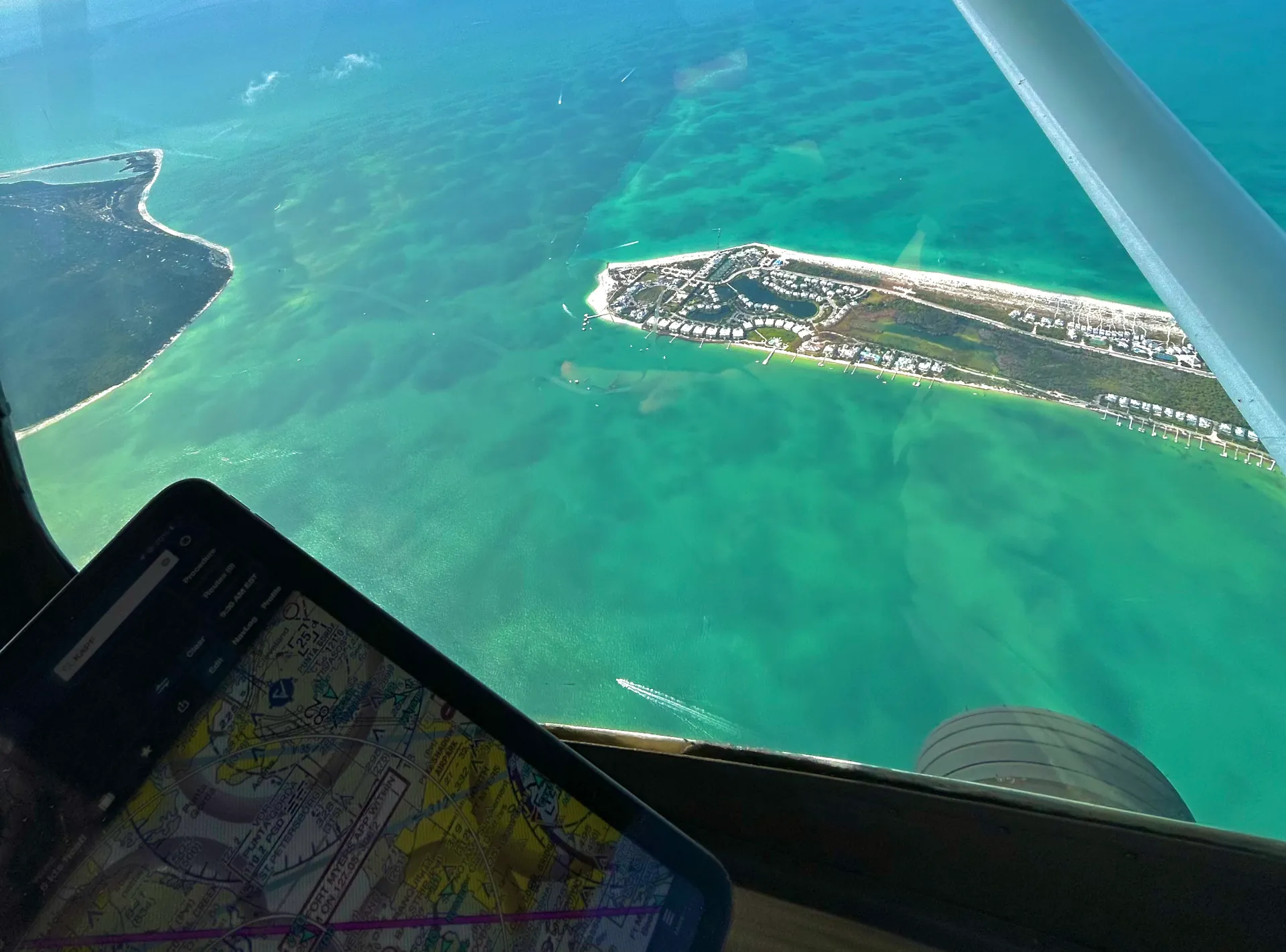
BasicMed can keep private pilots flying Gulf Coast trips after they have held a standard medical.
Understand where a driver’s license works instead
Sport pilot is the one airplane path where a U.S. driver’s license can serve as your medical qualification. Under 14 CFR 61.23(c), sport pilots flying aircraft that fit the light-sport limits in 61.316 can generally use their license, as long as they meet the FAA’s conditions.
Those conditions matter. You must follow any restrictions on your license. If you have applied for an FAA medical before, you must have been found eligible at your most recent application, and your latest medical cannot have been suspended or revoked. You also cannot know of a condition that would keep you from flying safely. The FAA expanded sport pilot privileges in 2025, so check the current rule text before you plan around it.
For most students training at SRQ toward a private certificate or a career, the standard medical is still the path. If you are weighing lighter options against a full certificate, our guide to becoming a pilot in Florida compares the main certificate paths.
FAQ
Do I need a medical certificate for my first flight lesson?
No. You can take lessons with an instructor before you hold a medical or a student pilot certificate. You need both before your first solo on the usual airplane path. A discovery flight is a common first step while you plan.
Which medical should a brand-new private pilot student get?
A third-class medical covers student and private pilot privileges. If you already know you want a flying career, consider applying for a first-class medical so you learn early where you stand.
Can I use BasicMed as a new student pilot?
Usually not at the start. BasicMed requires having held an FAA medical certificate at some point after July 14, 2006, so most new students get a standard medical first. Our flight school FAQ covers other early questions.
Does a flight instructor need a medical?
Only when acting as pilot in command or a required crewmember. In that case, the instructor needs at least a third-class medical or must fly under BasicMed. Our CFI program covers the rest of what an instructor needs.
How long does a third-class medical last?
Sixty months if you were under 40 on the exam date, and 24 months if you were 40 or older. It runs to the end of that month.
What if my AME defers my exam?
The FAA sends a letter listing the records it needs. Gather detailed, current records from your treating provider and work with your AME to submit them. See our article on how old is too old to become a pilot for how age factors into medical planning.
Start flying while your medical plan comes together
You do not need to have every medical answer before you touch the controls. Lessons can start today, and your medical can come together while you learn what flying feels like and which path fits your goals. Our instructors can help you time the AME exam so it is done well before solo and matches the class your goals call for.
Schedule a discovery flight at SRQ and take the first step toward your first solo with a plan that already has the medical covered.