How to Build Flight Hours: Instructing vs. Other Paths
Published by:
Joe Vasquez
You passed the commercial checkride, the examiner signed the paperwork, and for about a day it felt like the finish line. Then you opened your logbook, looked at the total, and did the math against 1,500 hours. The next chapter of your career is the gap between those two numbers.
How you build those hours shapes more than your timeline. It decides whether someone pays you to fly or you pay to fly, whether the time lands in the experience categories the ATP certificate asks for, and what kind of pilot you are when an employer finally reads that logbook.
Here at Universal Flight Training, our instructors and team talk with commercial-track pilots about this decision often. Below, we compare flight instructing with banner towing, aerial survey and patrol, ferry flying, skydiving jump flights, tour flying, and self-funded rental, so you can pick a path with your eyes open. If you are still working toward the certificate itself, start with our commercial pilot training program.
Know the hour math before you pick a path
The commercial certificate is the gateway. Under Part 61, an airplane applicant logs at least 250 hours of flight time, with specific pilot-in-command, cross-country, night, and training requirements spelled out in 14 CFR 61.129. That certificate lets you fly for compensation or hire when you meet the rules for the specific operation.
The airline transport pilot (ATP) certificate is the next big line. For the standard airplane ATP, 14 CFR 61.159 calls for at least 1,500 hours of total time, and the applicant must be at least 23. Those 1,500 hours also have to include:
- 500 hours of cross-country time
- 100 hours of night flight time
- 75 hours of instrument flight time (actual or simulated)
- 250 hours as pilot in command, including 100 hours of cross-country and 25 hours of night
- 50 hours in the class of airplane for the rating sought, such as multi-engine for an airplane multi-engine ATP
Some pilots qualify for a restricted ATP with fewer total hours under 14 CFR 61.160: 750 hours for qualifying U.S. military pilots, 1,000 hours for graduates with an aviation bachelor’s degree and at least 60 aviation credit hours from an FAA-authorized institution, and 1,250 hours for an aviation associate’s degree or 30 to 59 qualifying credit hours. The degree routes also carry Part 141 training conditions, the minimum age is 21, and the certificate carries pilot-in-command limits until you meet the full requirements. Check your exact eligibility before you plan around a lower number.
The practical lesson is simple. A pile of hours is only half the target. The better time-building path fills the right buckets on the way to the total.
Put the time-building paths side by side
Every path below involves tradeoffs. Job openings, pay, and the pace of hours depend on the employer, the season, and local demand, so treat this as a map of the terrain rather than a forecast.
| Path | Who pays for the flying | How hours tend to build | Experience quality | How this supports your next step |
|---|---|---|---|---|
| Flight instructing (CFI, CFII, MEI) | You are paid | Steady when students and aircraft are busy; capped at 8 hours of flight training per 24 hours | Teaching, judgment, and decision-making every flight; logs PIC while instructing | Adds depth in every area you teach; CFII and MEI widen who you can teach |
| Banner towing | You are paid | Quick in season | Repetitive, low-altitude, good-weather flying | Builds total and PIC time; less instrument or night |
| Aerial survey, photo, and patrol | You are paid | Long legs when work is active | Precise, visual, route or grid flying | Builds cross-country-style time; operators set their own minimums |
| Ferry and delivery | You are paid per trip | Bursts of long flights | Long-distance planning, weather, unfamiliar airports | Strong cross-country and planning exposure; work is irregular |
| Skydiving jump pilot | You are paid | Many short climbs in season | Busy, dynamic, repetitive loads | Builds PIC time and procedural sharpness |
| Tour flying | You are paid | Seasonal and weather-dependent | Passenger briefing, local airspace, customer service | Instrument rating matters for passengers for hire at night or past 50 NM |
| Self-funded rental or ownership | You pay | As fast as your budget allows | Whatever you plan it to be | Lets you target night, cross-country, or multi-engine time on purpose |
Notice the “who pays” column first. It separates the paths that fund themselves from the one path where every hour comes out of your pocket.
Why so many new commercial pilots choose instructing
The Bureau of Labor Statistics notes that many pilots earn a flight instructor certificate after the commercial because it helps them build time and experience at less personal expense (BLS Occupational Outlook Handbook). There are a few concrete reasons that happens.
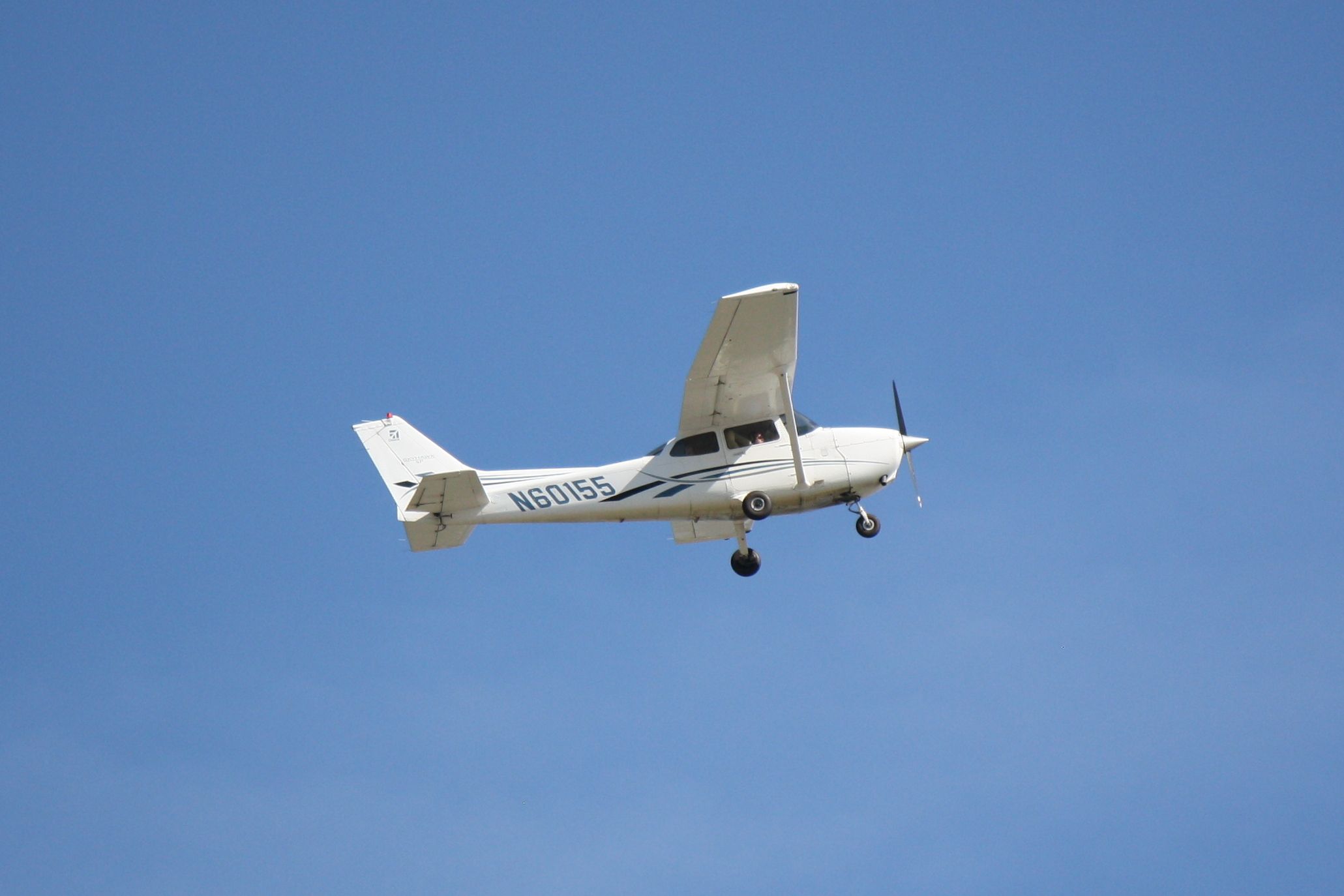
You log pilot-in-command time while you teach. Under 14 CFR 61.51(e)(3), a certificated flight instructor can log PIC time for all flight time while serving as the authorized instructor, as long as the instructor is rated to act as PIC of that aircraft. Picture yourself in the right seat, talking a student through a gusty crosswind at SRQ: that flight goes in your logbook as PIC while someone else pays for the airplane.
You get paid to fly. Instead of renting an aircraft by the hour, you earn income for each lesson. Pay structures differ from school to school, so we keep the focus on the direction of the money: toward you instead of away from you.
Your knowledge gets deeper, fast. Explaining stalls, weather, airspace, and aircraft systems to someone else exposes every gap in your own understanding. Many pilots describe instructing as the stage where they truly learned to fly, and that decision-making experience follows you into every cockpit after it.
The instructor ratings stack. A CFII lets you teach instrument students, and an MEI lets you teach in multi-engine airplanes. Because you log PIC while instructing in an aircraft you are rated for, MEI work is one of the ways instructors add multi-engine time toward that 50-hour class requirement. Earning your own multi-engine rating comes first.
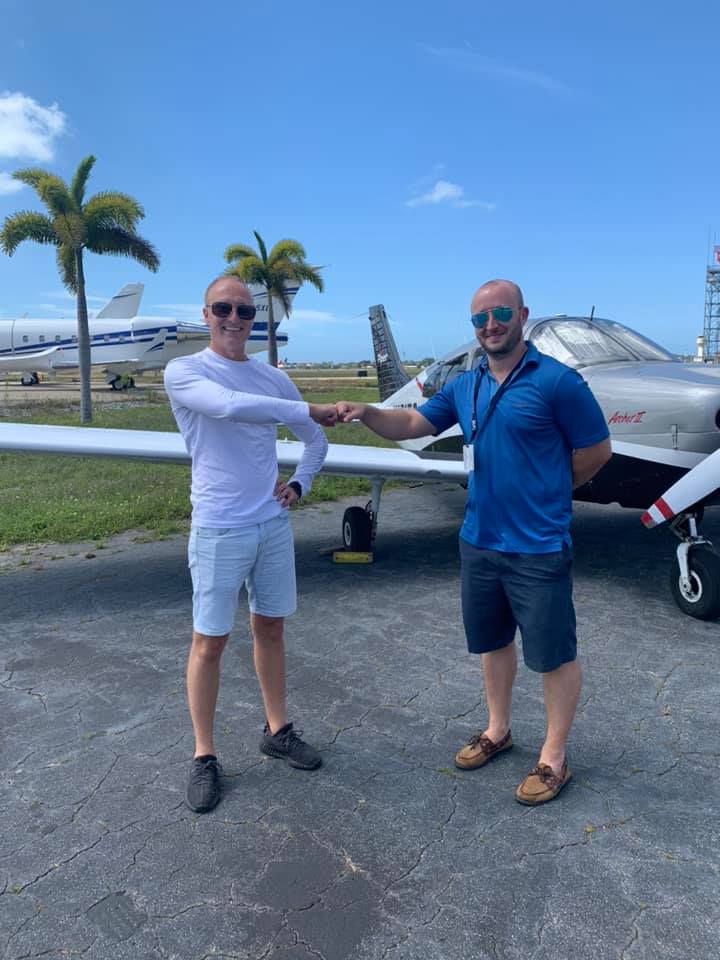
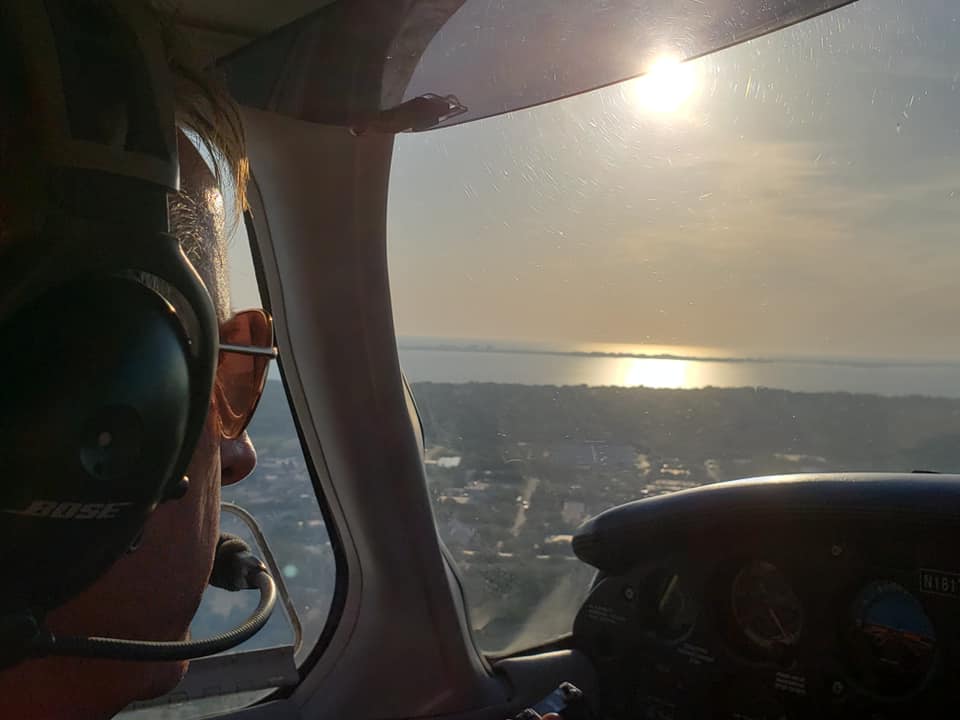
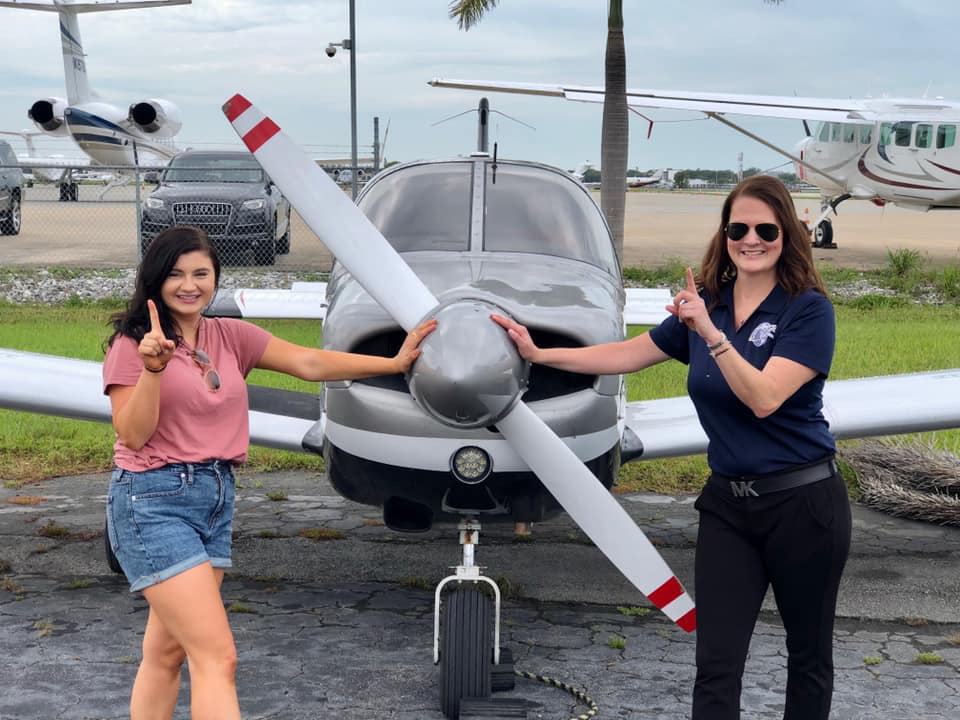
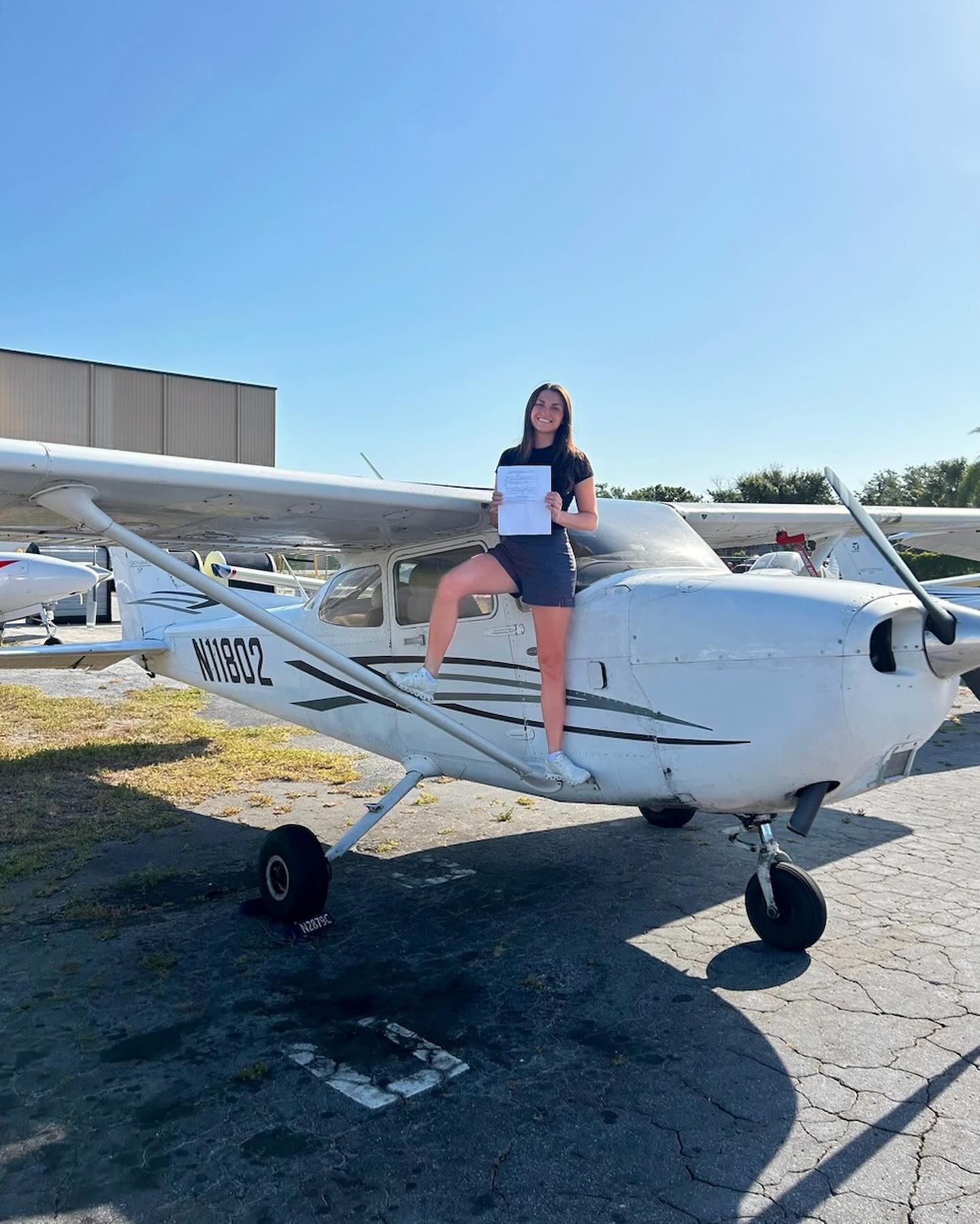
Instructing turns every lesson into logged time and a chance to sharpen your own flying.
Instructing asks something of you too. Teaching takes patience, preparation, and real interest in someone else’s progress. Weather and student schedules shape your weeks, and the 8-hour flight training limit in 14 CFR 61.195 sets a daily ceiling. If you enjoy helping people get better, those demands feel like part of the reward. Our CFI program is built for pilots who want that role.
Where the other paths earn their place
Instructing is common, but it is one route among several. Each alternative fits a certain kind of pilot, and several of them combine well with an instructor certificate.
Banner towing
Banner operators fly under an FAA certificate of waiver for towing (14 CFR 91.311), usually in tailwheel airplanes along busy beaches. AOPA’s career guide describes the work as seasonal and repetitive with modest pay, and it notes the experience is not the richest you can log (AOPA time-building guide). It can fill a summer quickly, but it adds little instrument or night time toward your instrument rating skills or ATP buckets.
Aerial survey, photo, and patrol
Survey, photography, and pipeline or powerline patrol flying means long, precise legs over a planned grid or route. It rewards careful flying and patience. Operators set their own experience and insurance minimums, and some want more time than a brand-new commercial pilot has.

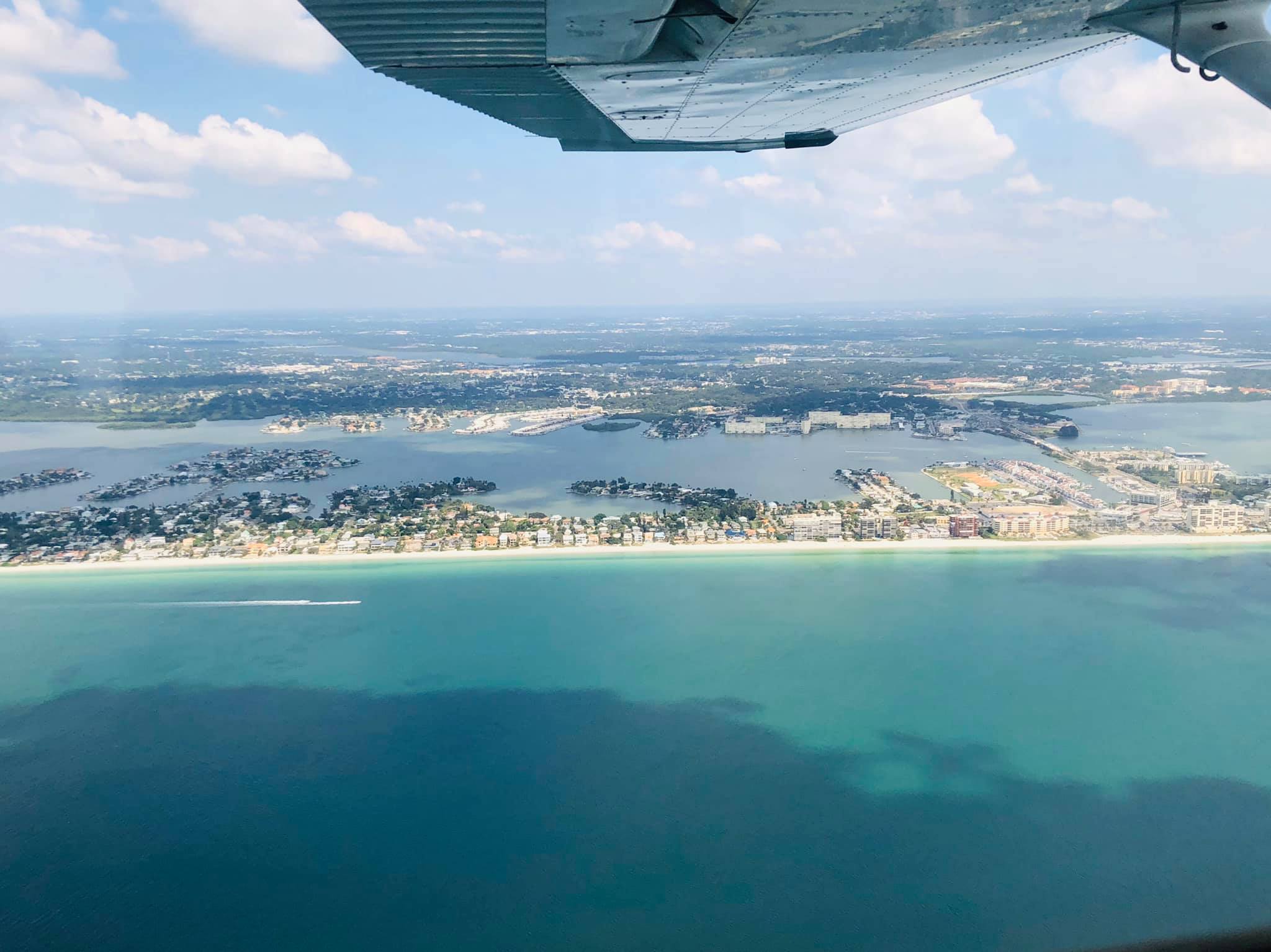
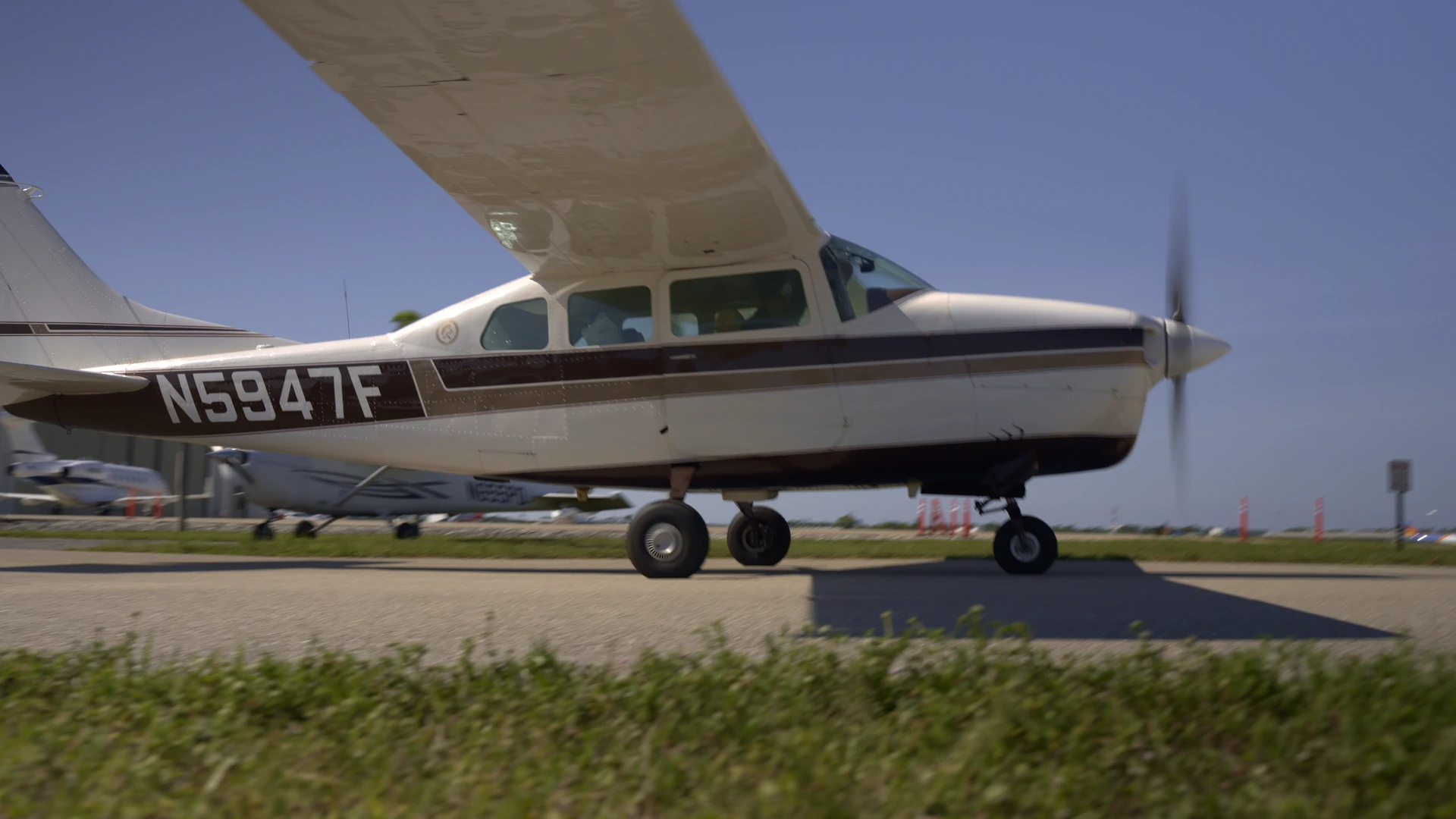
Survey and patrol work trades variety for long, precise legs over the ground below.
Ferry and delivery flights
Pilots interviewed by AOPA describe ferry trips logging 20 or more hours per mission, with long-distance navigation, weather planning, and unfamiliar airports along the way (AOPA Flight Training). The work tends to come through networking and reputation, so it is often a supplement rather than a steady schedule. Solid instrument skills make those trips far more practical.
Skydiving jump flights
Jump flying means many short climbs, quick descents, and constant coordination with jumpers, winds, and traffic. The same AOPA reporting points to strong situational awareness from the pace, with work that is usually seasonal. Most of the time is day VFR, so plan other ways to fill your night and cross-country buckets, starting with a clear commercial training plan.
Tour flying
Air-tour operators need their own FAA authority to carry paying passengers (14 CFR 91.147), and pilots on those flights build passenger-briefing and local-airspace skills. Hold an instrument rating with your commercial: without it, federal rules prohibit carrying passengers for hire on cross-country flights over 50 nautical miles or at night.
Self-funded rental or ownership
Paying for your own time is the most controllable and most expensive option. You choose the aircraft, the routes, the night flights, and the instrument practice, which makes it useful for targeting specific ATP buckets. The cost is real, so many pilots use it to fill gaps rather than as the whole plan. If budget is part of the decision, our financing resources explain the third-party options available to qualified applicants, with terms set by each provider.
Match the path to the pilot you want to become
Before you choose, picture the logbook an employer will read. Every serious employer will see the total, and the ATP buckets are the one list every applicant shares. Ask yourself a few honest questions.
- Do you enjoy teaching? If yes, instructing gives you paid flying, PIC time, and a deeper grasp of everything you teach.
- Which ATP buckets are thin? Night, instrument, cross-country, and multi-engine time are easier to plan for than to backfill.
- Can you relocate or travel? Banner, tour, survey, and jump work often follow seasons and specific regions.
- What does your budget allow? Paid paths protect your savings; self-funded time gives you control.
- Is your medical in order? Commercial privileges generally call for a second-class medical, and airline ATP duties a first-class. Our guide to FAA medical certificate classes explains the differences.
Many pilots combine paths: instructing during the week, a ferry trip when one comes up, or a few self-funded night cross-countries to round out the requirements. For a wider view of where those hours can lead, see our look at the pilot career in Florida.
Whatever path you choose, plan the kind of time you log, not just the total.
FAQ
How many hours do I need after my commercial certificate?
For a standard airplane ATP, you need 1,500 hours total with the specific experience requirements in 14 CFR 61.159. With a 250-hour commercial, the gap is roughly 1,250 hours. Qualifying military pilots and graduates of FAA-authorized aviation degree programs can apply for a restricted ATP at 750, 1,000, or 1,250 hours. The commercial pilot program is where that count starts.
Can a flight instructor log PIC time while teaching?
Yes. Under 14 CFR 61.51(e)(3), a certificated flight instructor logs PIC time for flight time while serving as the authorized instructor, as long as the instructor is rated to act as PIC of that aircraft. Learn more on our CFI program page.
Is instructing the only good way to build hours?
No. Banner towing, survey and patrol work, ferry flights, jump flying, tour flying, and self-funded rental all build time. Instructing stands out because it is paid, logs as PIC, and deepens your knowledge, but the right choice depends on your goals, budget, and location. Our pilot career overview covers the bigger picture.
Do I need a CFII or MEI to build time as an instructor?
A CFI certificate is the starting point. CFII and MEI add teaching privileges for instrument students and multi-engine airplanes, which widens the students you can fly with and can add multi-engine time. Each one starts with the matching pilot rating, such as the multi-engine rating.
Does time-building flying pay well?
Pay differs widely by employer, region, and season, so we do not quote numbers. The useful comparison is direction: instructing and the other job-based paths pay you, while rental time costs you. Our financing page covers ways to fund the training that comes before the paid work.
Take the next step toward paid flying hours
If the case for instructing fits you (paid flying, PIC time in your logbook, and a deeper command of everything you teach), the next step is the instructor certificate itself. Explore our Certified Flight Instructor program in Sarasota to see how the training works and to start a conversation with our team about where you are now.