What to Expect on Your FAA Written Exam
Published by:
Jacob Kyser
The FAA written exam can feel bigger in your imagination than it feels once you understand the rhythm of test day. You study weather reports, airspace, performance charts, regulations, aerodynamics, and cockpit decision-making, then you sit down at a testing-center computer and prove you can use that knowledge under a time limit.
That matters because even though the written exam might feel like just a box to check before your checkride, it is one of the first places where your ground training starts to connect with real pilot judgment. At Universal Flight Training, we want you to walk into the exam prepared, calm, and clear on what the test is actually measuring.
Your FAA Written Exam Is a Knowledge Test, Not a Flying Test
For most new airplane students, the written exam people talk about is the Private Pilot Airplane knowledge test, also known by the FAA test code PAR. It is separate from your flight lessons and separate from your practical test, but all three are connected.
The knowledge test checks whether you understand the ground topics a safe pilot needs before acting as pilot in command. You can expect questions that draw from areas such as:
- Airspace and airport operations
- Weather theory, reports, and forecasts
- Aircraft performance and limitations
- Navigation, charts, and flight planning
- FAA regulations and operating rules
- Aerodynamics and aircraft systems
- Risk management and aeronautical decision-making
Those subjects show up again in the cockpit. When you review a weather briefing before a lesson at SRQ, talk through a go/no-go decision with your instructor, or plan a short cross-country flight along the Gulf Coast, the written-test material starts becoming usable judgment.
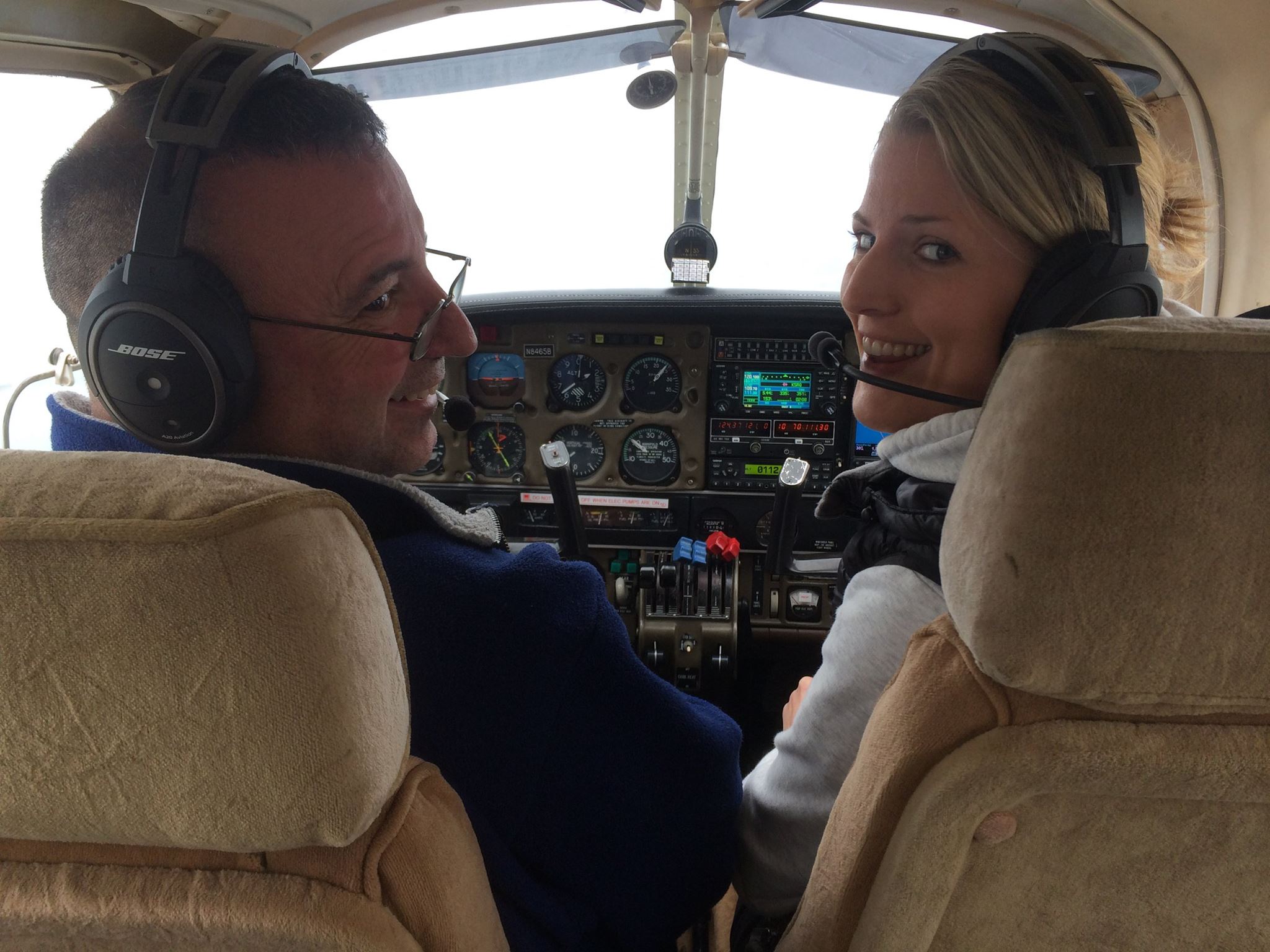
Ground study becomes more useful when it connects to the decisions you will make in the airplane.
If you are still early in training, our Private Pilot Course gives you the larger context: the written exam supports your certificate path, but it does not replace flight instruction, instructor signoffs, or practical-test preparation.
What the Private Pilot Written Exam Looks Like
For airplane private pilot students, the FAA currently lists the PAR test as 60 questions, with 2 hours allowed and a 70 passing score. The FAA also lists a minimum age of 15 for taking that knowledge test. You can review current FAA testing details through the FAA Airman Knowledge Testing Matrix.
The test is multiple choice and computer based. You will work through scenarios, calculations, charts, regulations, and judgment questions that help show whether you understand the knowledge side of pilot training.
Bring the mindset of a pilot, not just the mindset of a test taker. If a question gives you a weather report, aircraft loading situation, or airspace scenario, slow down and ask what decision a safe pilot is being asked to make.
Students pursuing other certificates or ratings can have different knowledge-test codes, question counts, and time limits. If you are moving beyond private pilot training into the Instrument Rating, Commercial Pilot, or another program, your instructor will help you prepare for the correct exam.
How Scheduling and Test Day Usually Work
FAA knowledge tests are scheduled through authorized testing centers. Before you schedule, make sure you know which test code you need, what identification is required, and whether you need an instructor endorsement or other authorization for your specific test.
On test day, expect a controlled testing environment. You will check in, follow the testing center’s instructions, and use only materials allowed under FAA and testing-center rules. That is one reason we encourage students to treat the logistics as part of preparation. The less energy you spend wondering what happens at check-in, the more attention you can give to the exam itself.
A simple week-before checklist can help:
- Confirm your test code and appointment details.
- Review required identification and authorization.
- Check what materials are allowed at the testing center.
- Rework missed practice questions by topic, not just by answer choice.
- Sleep, eat, and arrive early enough that you are not rushing.
If cost planning is part of your bigger training decision, build the written exam into your full budget instead of treating it as an isolated expense. Our financing information can help you think through training costs, payment timing, and the resources available as you move through each stage.
How to Study Without Turning It Into Memorization
Memorization has a short shelf life in aviation. You might remember an answer long enough to pass a practice quiz, but that does not help much when the same idea appears later as a weather decision, a performance calculation, or a checkride discussion.
Better preparation starts with patterns:
- Learn the concept first
Know why density altitude changes performance before drilling performance questions. - Practice with charts and figures
Get comfortable reading what the question is actually asking. - Keep a missed-topic list
Track weak areas like airspace, weather, aircraft systems, or regulations. - Review with your instructor
A good debrief can turn a missed question into a cockpit habit. - Connect study topics to lessons
If you just practiced landings, revisit runway markings, traffic patterns, wind correction, and performance.
At UFT, written-exam preparation is part of a larger training rhythm. Your instructor can help you see how ground school, flight lessons, simulator-supported practice when appropriate, and debriefs work together. The goal is to become the kind of student pilot who understands what the airplane, the weather, and the airspace are telling you.
What Happens After You Pass
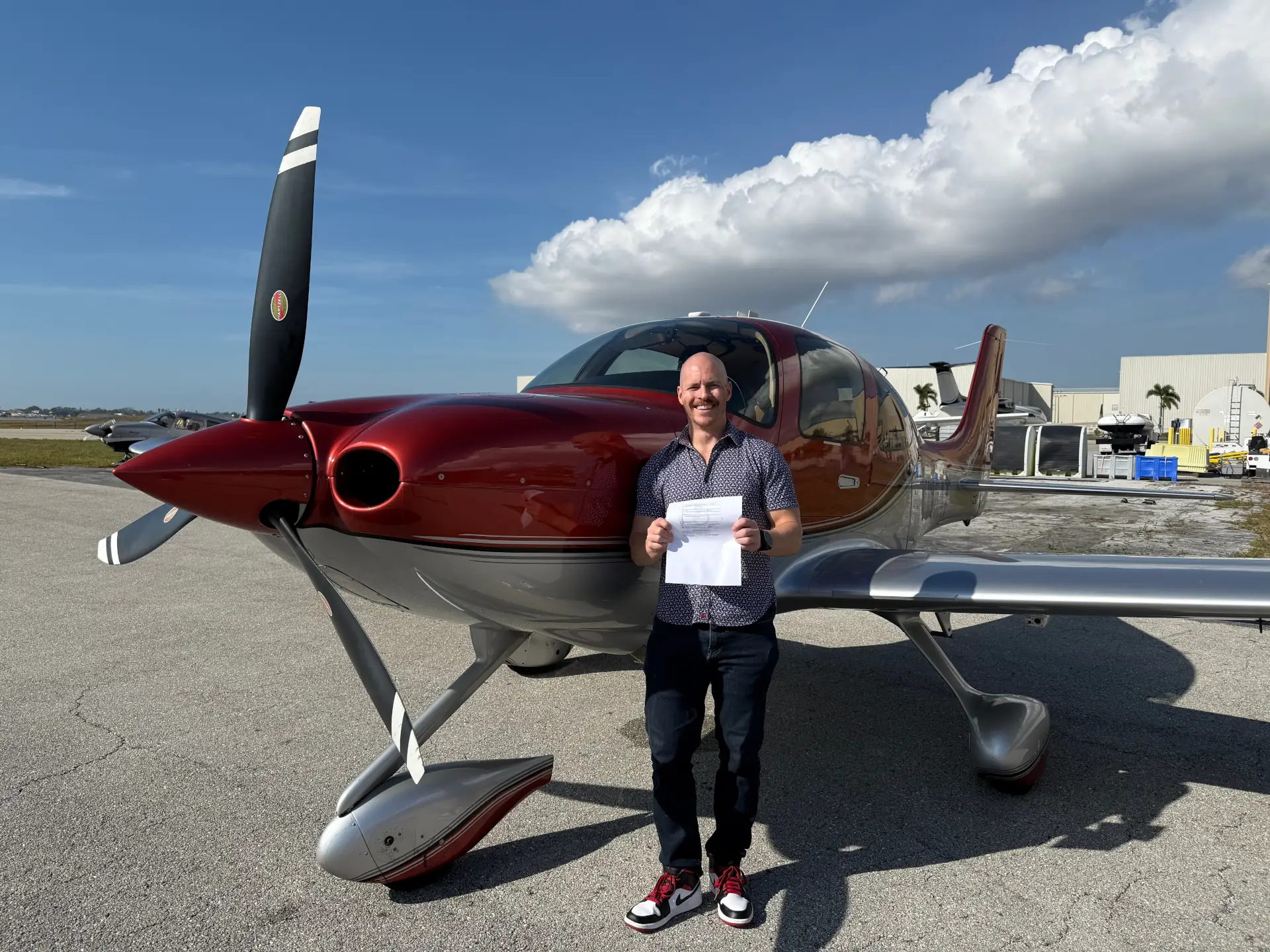
After the test, you receive your airman knowledge test paperwork. Keep it. Your instructor will use those results as part of your training record and practical-test preparation, especially when missed-topic codes identify areas that need review.
Passing the written exam is a strong milestone, but it is not the end of training. You still need to keep building flight proficiency, decision-making, aircraft control, navigation skill, and checkride readiness. Think of the written as proof that your ground knowledge is taking shape. Your flight training turns that knowledge into habits.

After the written exam, your training keeps moving from study topics into real cockpit skill.
This is where structure helps. A student who passes the test and then lets the material sit can lose momentum. A student who brings those results back into lessons can use them to sharpen oral-exam answers, flight planning, and risk management before the practical test.
If You Do Not Pass the First Time
Nobody wants to retest, but a missed attempt does not end your training. It gives you a very specific job: identify the weak areas, review them with your instructor, and come back with a better grasp of the material.
Avoid the temptation to simply take more practice tests until the score rises. Practice exams can help, but only when you are learning why the right answer is right. If airspace questions keep tripping you up, draw the airspace. If weather products feel muddy, read them before real lessons. If performance charts slow you down, practice them until the workflow feels familiar.
That kind of review is useful even for students who pass. The checkride is not looking for lucky guessing. It is looking for a pilot who can explain decisions clearly and apply knowledge in context.
FAA Written Exam FAQs
Is the FAA written exam the same as the checkride?
No. The written exam is the knowledge test. The checkride, also called the practical test, includes an oral portion and a flight portion with an examiner. Your written exam supports checkride preparation, but it does not replace it.
When should I take the written exam?
Your timing should fit your training plan. Many students take it after they have built enough ground knowledge to understand the material and before they are deep into final checkride preparation. Your instructor can help you choose a smart window.
Can I start flight training before passing the written?
Yes. Many students fly while they are still preparing for the knowledge test. Flight lessons can make ground topics easier to understand because you are seeing the ideas in action.
Does UFT help with written exam preparation?
Yes. We help students connect ground knowledge to flight training, instructor review, and the practical skills they are building in the airplane. If you are planning your path from first lesson to certificate, we can help you map the next step.
Start Training With a Clear Plan
The FAA written exam is serious, but it does not have to be intimidating. With the right preparation, it becomes a structured checkpoint in your training: study the concepts, connect them to flying, review your weak areas, and keep moving toward the cockpit skills that matter.
If you are ready to begin, schedule a Discovery Flight with Universal Flight Training and take the first step toward a training plan that makes the written exam feel manageable, useful, and connected to your goal of becoming a pilot.