
How Old Is Too Old to Become a Pilot?
Published by:
Joe Vasquez
Maybe becoming a pilot was the dream you set aside while work, family, and everyday responsibilities took priority. Now the dream is back, but so is a quieter thought: Did I wait too long?
The good news is: the answer is often no. The FAA does not set a general maximum age for pilots. Starting later may change your training plan, especially if an airline career is the goal, but age alone rarely decides whether you can learn to fly.
We believe that question deserves more than a number. It deserves an honest look at what you want from aviation, what concerns are holding you back, and what one first flight could teach you. A discovery flight lets you explore the dream with an instructor before committing to a complete program.
You probably have more runway than you think
There is no broad FAA cutoff that says you are too old to earn a pilot certificate or continue flying in the United States. The FAA addresses that point directly in its maximum pilot age guidance.
That means the birthday you just celebrated does not automatically close the cockpit door. You still need to learn the required knowledge and skills, meet the standards for the certificate you pursue, and stay proficient for the flying you plan to do. Those expectations apply to every student.
You can even take lessons with an instructor before you need a student pilot certificate for solo flight. The FAA explains this distinction in its student pilot guidance. You do not have to prove that you can complete the whole journey before earning the right to begin it. If you want to see what that beginning feels like, our guide to what happens on a discovery flight can help you arrive prepared.
Your pilot dream can lead somewhere other than the airlines
Many aspiring pilots quietly abandon the idea because they assume every worthwhile path must end in an airline cockpit. Becoming a pilot can mean different things to different people.
- A personal dream: You may want to earn a private pilot certificate, enjoy local flights, or share aviation with people you love.
- A new challenge: You may want a goal that asks you to keep learning, practice deliberately, and see your world from a different perspective.
- A professional direction: You may be exploring paid flying or a larger aviation career change. The requirements depend on the work and operation.
- A Part 121 airline career: The FAA says airlines operating under Part 121 cannot employ pilots after age 65. That specific employment limit makes timing especially important for this path.
If the airline flight deck is your dream, do not dismiss it based on a vague feeling that you are behind. Look carefully at how much training and experience you would need before the age-65 Part 121 employment limit, then decide with real information. Our Florida pilot career guide lays out the major stages without treating employment as automatic.
If the dream is personal flying, sharing a flight with family, or finally accomplishing something you have postponed, the calculation is very different. For many new airplane students, the Private Pilot Course is the path that turns that dream into a concrete goal.
Replace the biggest fears with questions you can answer
What if I am not healthy enough? What if I learn more slowly than younger students? What if I spend the money and discover I cannot do it? These are understandable fears, but none can be answered accurately by age alone.
Start by turning each fear into a practical question:
- Medical eligibility: The FAA says there is no maximum age for obtaining a medical certificate, but every applicant must meet the applicable standards.
- Ability to learn: An instructor can assess how you absorb the briefing, respond to coaching, and manage the cockpit far better than an age stereotype can.
- Physical comfort: Sitting in the aircraft and working with the controls can tell you more about mobility and comfort than imagining the experience at home.
- Time and cost: A written training plan can connect your availability and budget to a sustainable lesson schedule.
For the usual airplane student path, a third-class medical is generally sufficient when a medical is required before solo, although other FAA-recognized qualifications and exceptions can apply depending on the operation and privileges.
If you have a medical history, diagnosis, or medication question, review the FAA’s medical certification resources and speak with an Aviation Medical Examiner before making a major training investment. That conversation can replace uncertainty with information. Our flight school FAQ also explains when medical planning enters the student journey.
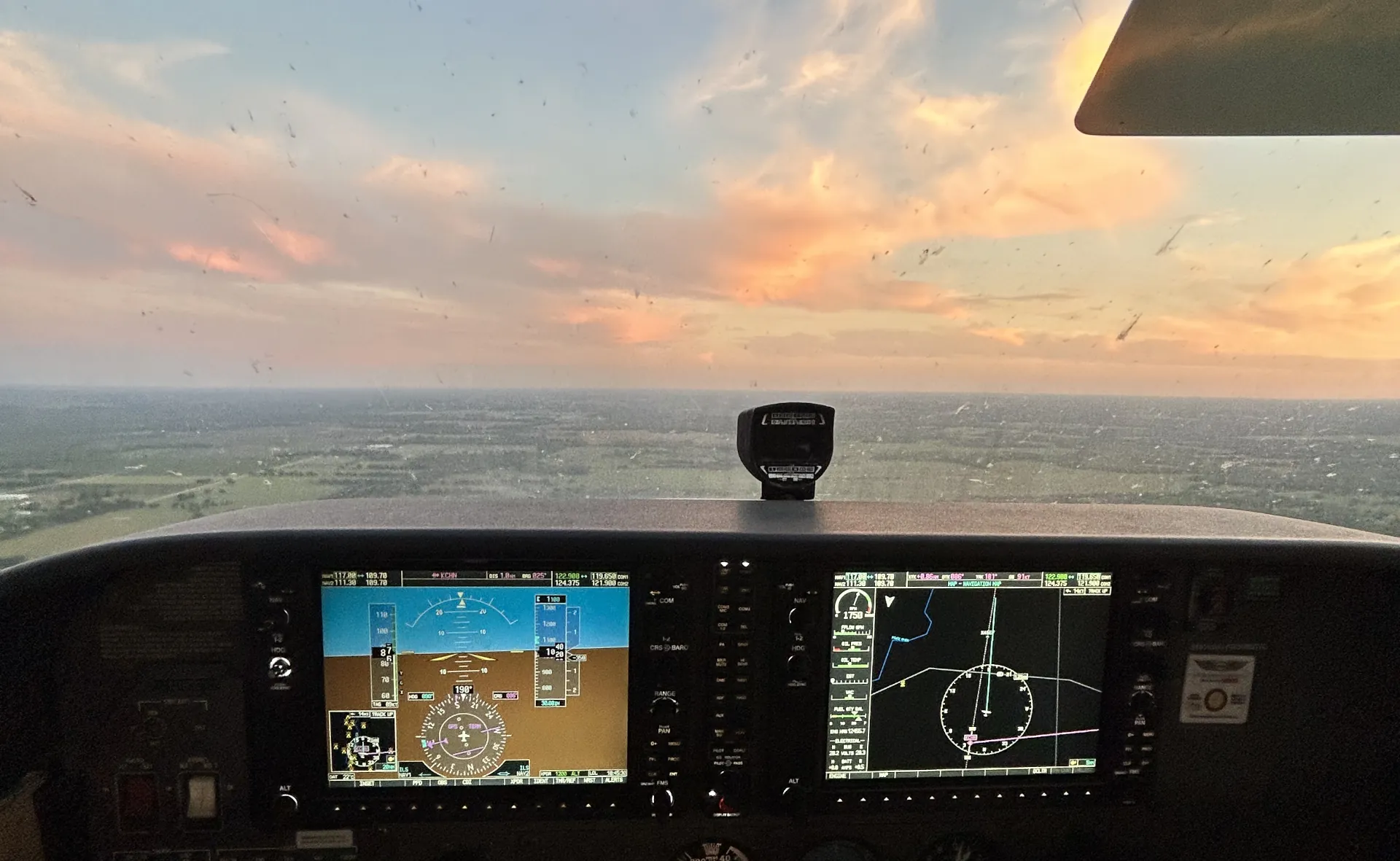
Progress comes from preparation, instructor feedback, and a plan you can sustain.
Starting later does not mean starting empty-handed
You may be new to the cockpit, but you are not new to learning hard things. A later-life student may bring patience, preparation, realistic risk awareness, and the discipline to protect time on a calendar. Those qualities do not replace flying skill, but they can support how you approach each lesson.
There can also be real friction. Work and family responsibilities may compete with scheduling. A longer break between lessons can mean spending time rebuilding skills. Some students need more repetition in one area, while others progress quickly. The honest measure is individual proficiency, not a stereotype about age.
The goal is not to train like someone with a completely different life. It is to build a schedule you can actually keep. Our guide to how many flight lessons to schedule each week explains why consistency matters while leaving room for your budget, availability, and learning pace.
A realistic plan makes the dream feel possible
Sometimes the thought that you are too old is carrying another fear underneath it: I do not know whether I have the time or money to finish. Flight training is a significant investment, and later in life that investment may compete with family obligations, retirement saving, or a career transition.
Before enrolling, ask for a current estimate and understand what it includes. Plan for aircraft and instructor time, ground preparation, tests, medical expenses, supplies, and possible additional training needed for proficiency. Then match that budget to the lesson frequency you can sustain. The point is to give the dream a workable shape, not pressure yourself into someone else’s timeline.
Explore flight-training financing options, but remember that they are subject to provider approval and terms. Compare interest, fees, repayment timing, and total borrowing cost before accepting an offer. A sustainable plan is more useful than an aggressive plan you cannot maintain.

Your training plan should connect cockpit practice with the certificate and flying goals you actually want.
You do not have to conquer the whole dream today
The fear of being too late often makes the first step feel much bigger than it is. You do not need to choose an airline path, finance an entire program, or know whether you will pass a future checkride before sitting in the airplane.
An introductory flight can help you evaluate comfort, communication, workload, excitement, and the learning environment with an instructor beside you. You may leave certain that you want to continue. You may leave with better questions. Either outcome moves you beyond guessing.
Afterward, discuss what you enjoyed, what felt difficult, and what kind of flying interests you. If you are brand new, we can help you compare our pilot training programs after you clarify whether your dream is personal flying or a professional direction.
The calendar may shape your plan, especially for Part 121 airline ambitions. It does not get to dismiss the dream before you have explored it.
Schedule a discovery flight and let one real experience give you better information than years of wondering whether it is too late.