What to Expect on a Discovery Flight, Step by Step
Published by:
Jacob Kyser
The first few minutes of a discovery flight happen before the propeller ever turns. You meet your instructor, talk about why you came, walk around the airplane, and learn what you will see and hear in the cockpit. Then comes the part you have been imagining: taxiing out, taking off, and seeing the world from the front seat of a small airplane.
If you are wondering what happens on a discovery flight, the short answer is that it is a guided introduction to the airplane, the airport environment, and the feel of flying. When you take a discovery flight with us, we want you to leave having experienced the excitement of the skies and with a clearer picture of aviation without overloading you with complicated topics and pilot jargon.
The exact aircraft, route, timing, and amount of hands-on participation can change with weather, air traffic, availability, and instructor judgment. The overall experience, however, usually follows the steps below.
1. You Meet Your Instructor and Talk About Your Goals
Your instructor will begin with a simple conversation: What brought you to the airport? You might be exploring a professional pilot career, thinking about flying for fun, checking off a lifelong goal, or giving aviation a serious first look.
There is no correct answer. Your goal helps the instructor decide what to emphasize. A career-minded guest may want to understand the path to a Private Pilot certificate. Someone who is simply curious may care more about the view, the controls, and how the airplane feels.
This is also the time to mention concerns such as motion sensitivity, nervousness, or unfamiliarity with small aircraft. You do not need to arrive knowing aviation vocabulary. Questions are part of the experience.
2. You Walk Around the Airplane Before Boarding
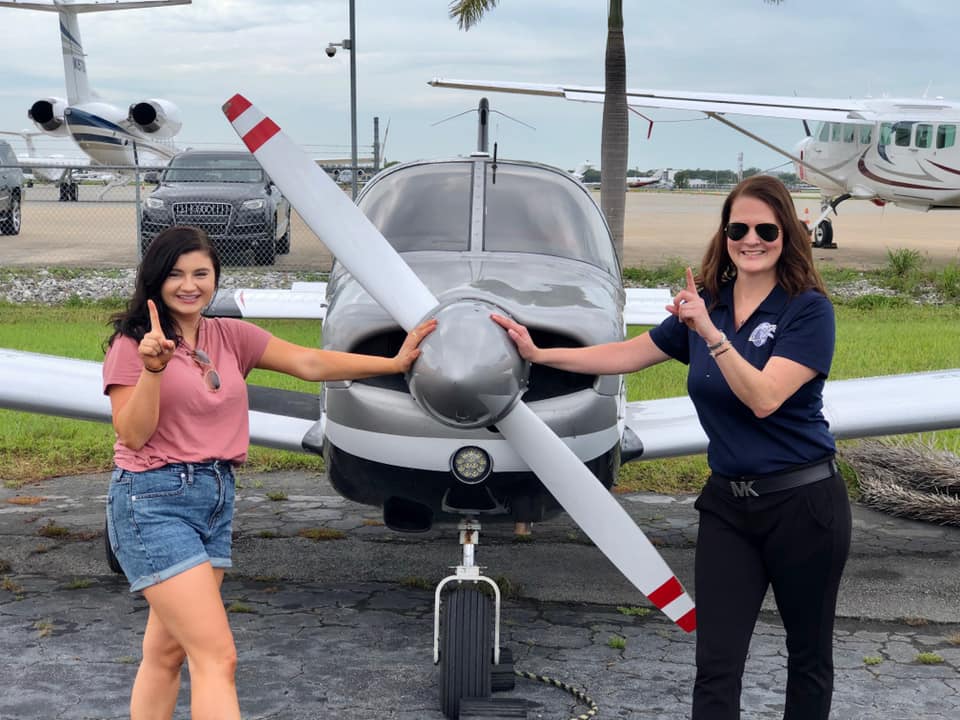
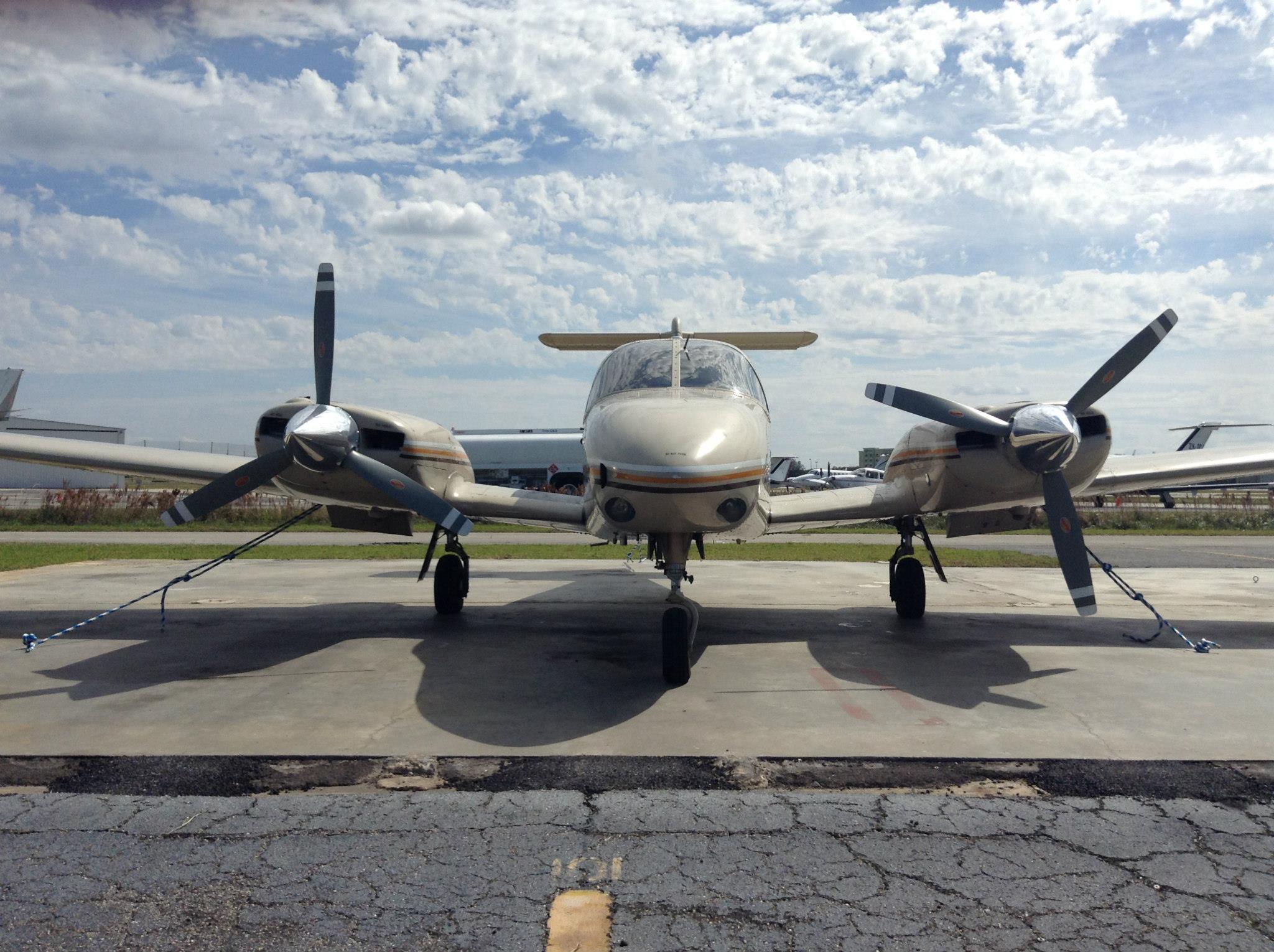
Before a flight, pilots inspect the aircraft. On a discovery flight, your instructor may guide you through parts of that preflight walk-around and explain what is being checked.
You may look at the wings, tires, control surfaces, fuel, and other visible areas while the instructor works through a checklist. The point is to show that flying begins with preparation and disciplined habits.
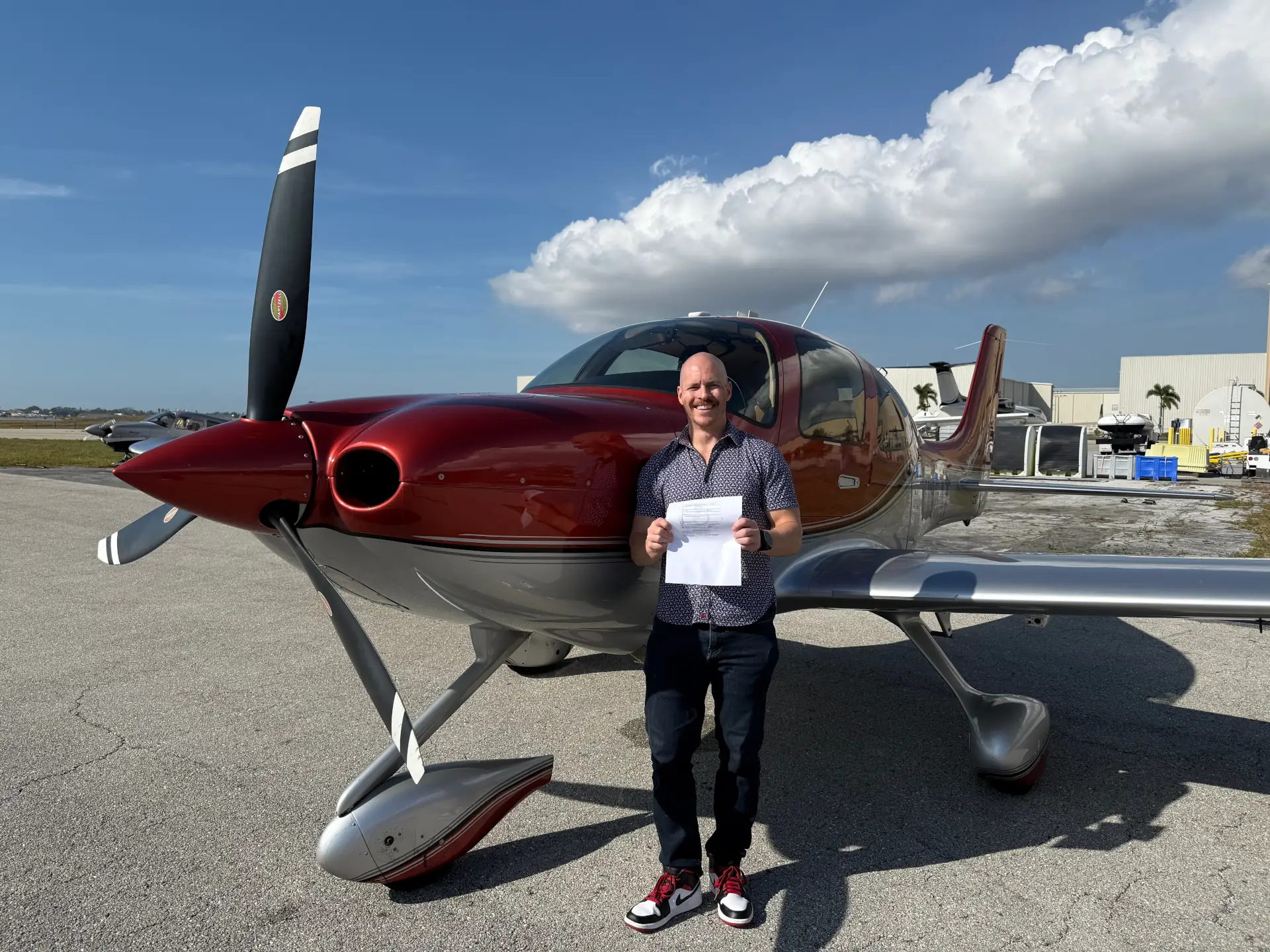
This is a good moment to ask why a particular feature matters or how training airplanes differ. You can also explore the aircraft in our training fleet before your visit if you want a little context.
What to notice: Pilots do not simply climb in and go. The walk-around establishes a rhythm of checking, confirming, and thinking ahead.
3. You Get a Cockpit and Safety Briefing
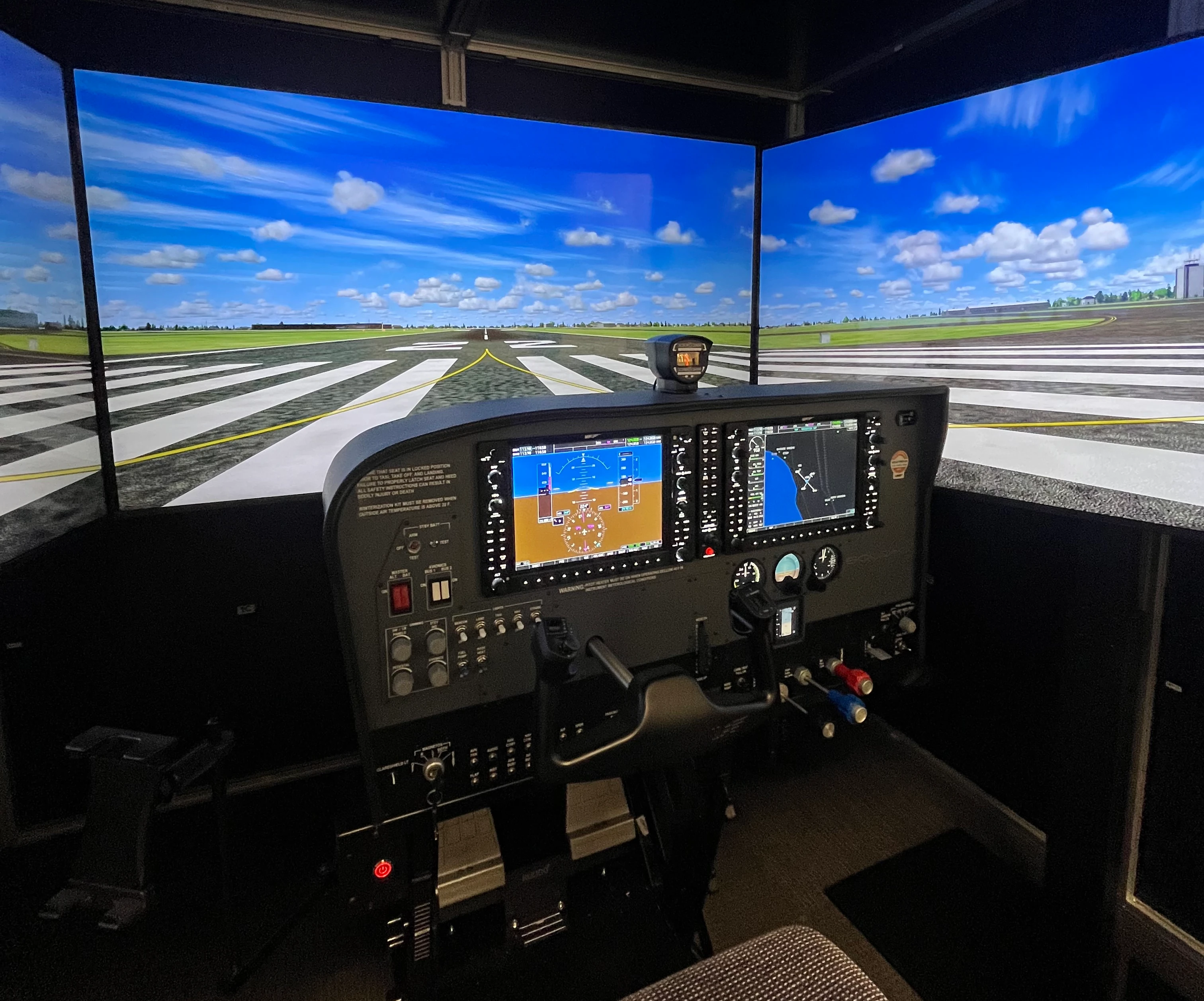
Once seated, the cockpit may look busy. There are flight instruments, radios, switches, pedals, control yokes or sticks, and a checklist within reach. Your instructor will focus on what matters for this flight rather than explaining every item at once.
Expect guidance on the seat belt, headset, doors, basic controls, and how the instructor will communicate with you. You may hear phrases about who has the controls. Clear control transfer matters: the instructor tells you when to follow along, when to relax your hands, and when they are flying.
At Sarasota Bradenton International Airport, radio calls and taxi instructions are part of the environment you may hear. If the pace sounds fast at first, that is normal. The instructor is managing the flight while helping you understand what is happening.
Curious about how those cockpit skills develop after the first flight? Our pilot training guide maps the broader learning path.
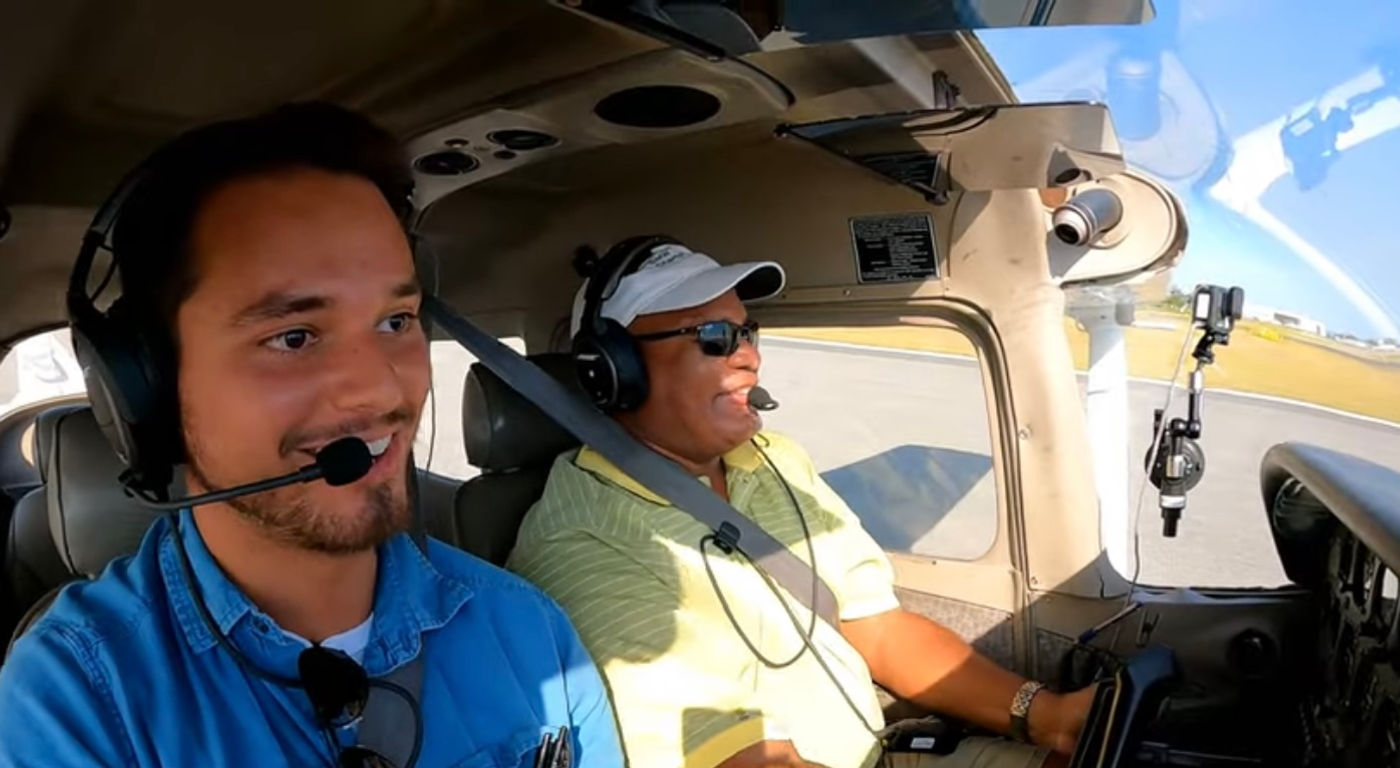
Headsets let you hear your instructor and the radio communication around the airport.
4. You Taxi Out and Watch the Flight Come Together
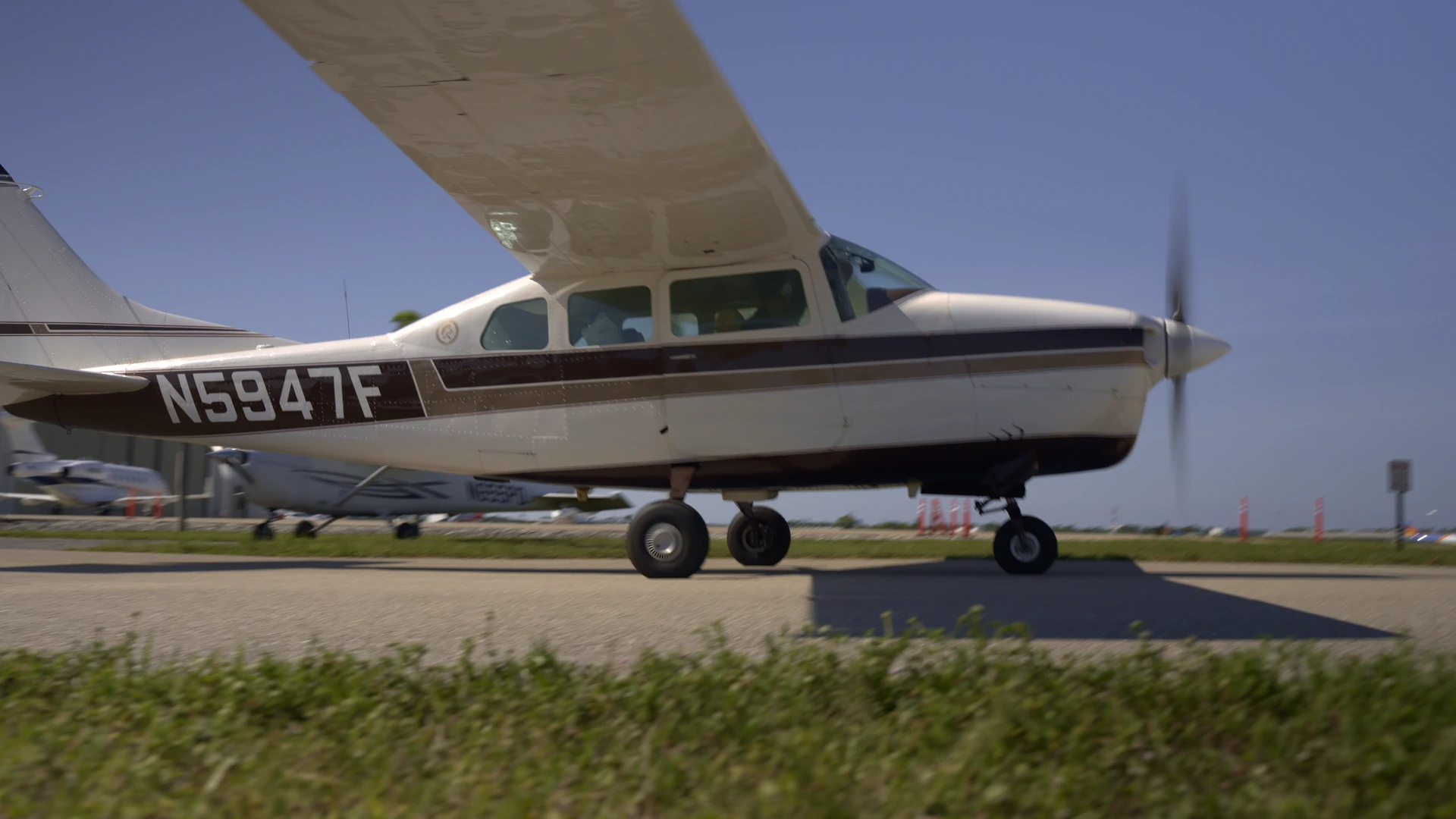
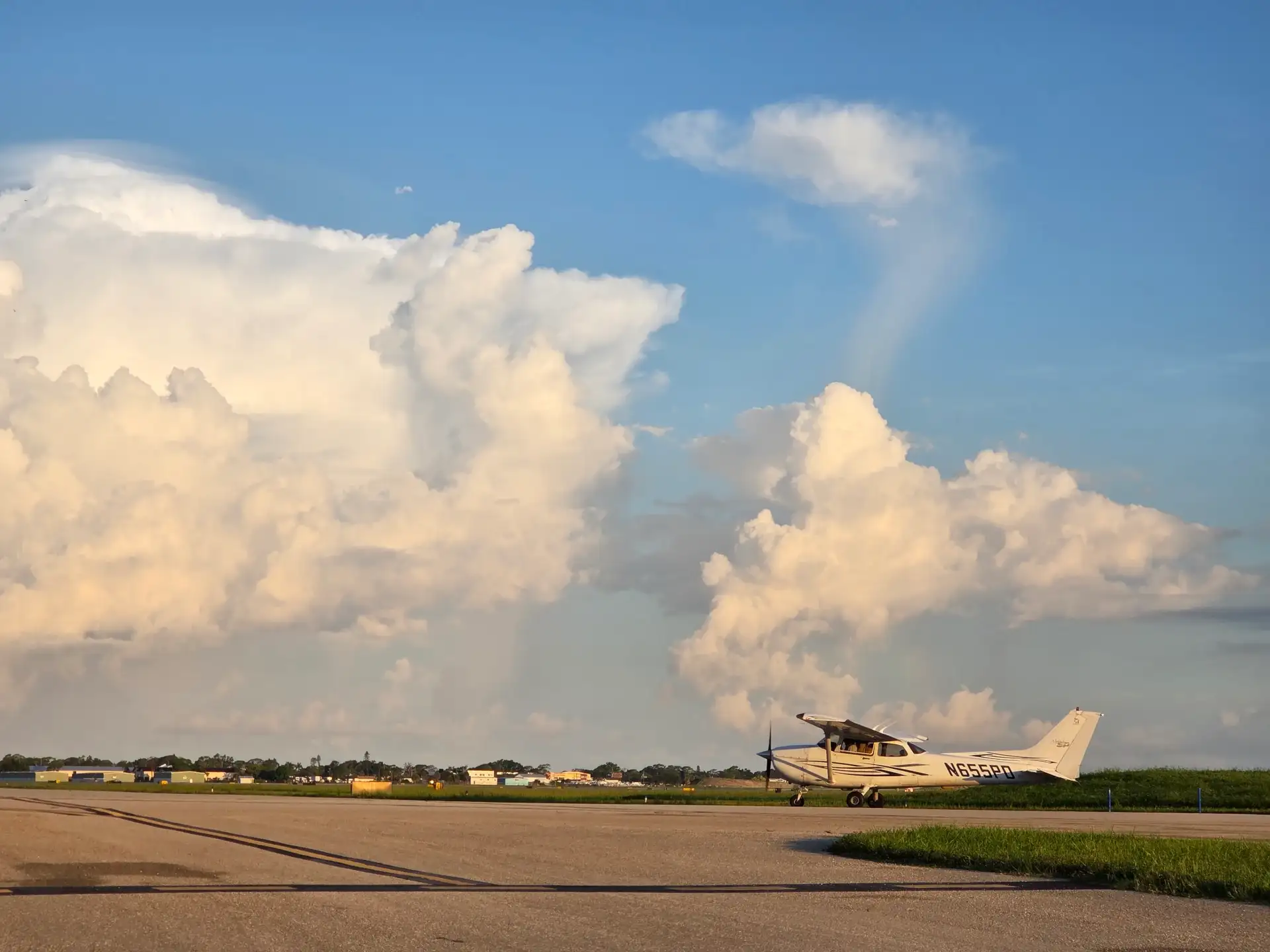
Taxiing is the airplane’s movement on the ground. This stage gives you a front-row view of airport signs, pavement markings, checklists, radio communication, and the final preparations before takeoff.
The instructor may explain how the airplane is steered on the ground and why pilots pause for checks before entering the runway. This is where aviation starts to feel real: the pieces you saw during the walk-around become part of an operating aircraft.
Training at SRQ means you may observe the routines of a towered airport, including clearances and organized ground movement. It is one part of the local environment discussed in our guide to learning to fly in Sarasota and Bradenton.
5. You Take Off and Experience the Airplane in Flight
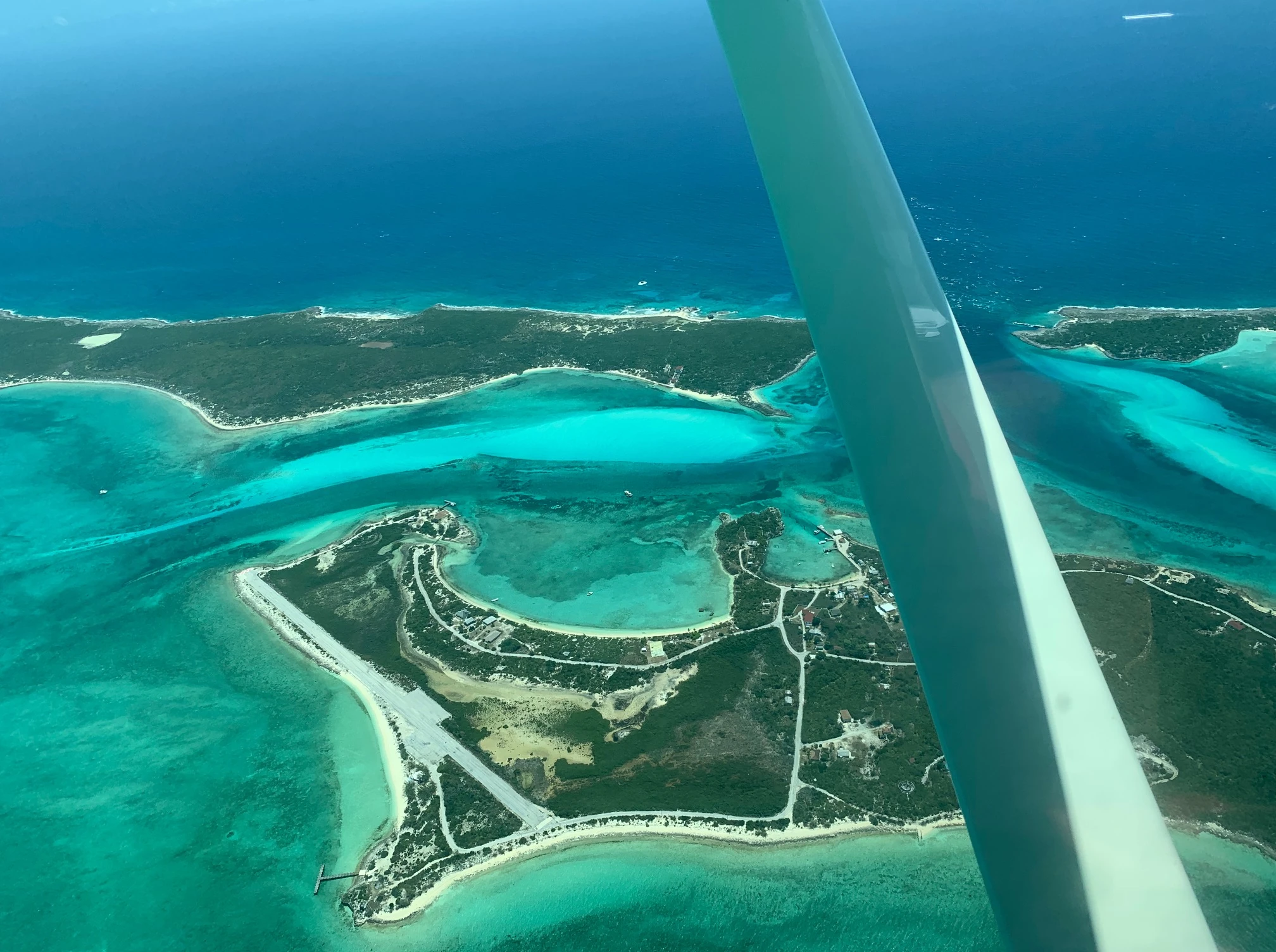
Takeoff is often the moment the nerves give way to attention. The runway falls behind, the horizon opens up, and landmarks begin to look completely different from above.
After the airplane is established in flight and conditions allow, your instructor may invite you to follow along on the controls or try gentle inputs. Small movements can produce clear changes in pitch or bank. Your instructor remains in charge and will guide the exercise or take the controls whenever needed.
You are not expected to perform maneuvers perfectly. The useful discovery is how the airplane responds, how the horizon helps with orientation, and how your instructor breaks flying into manageable actions.
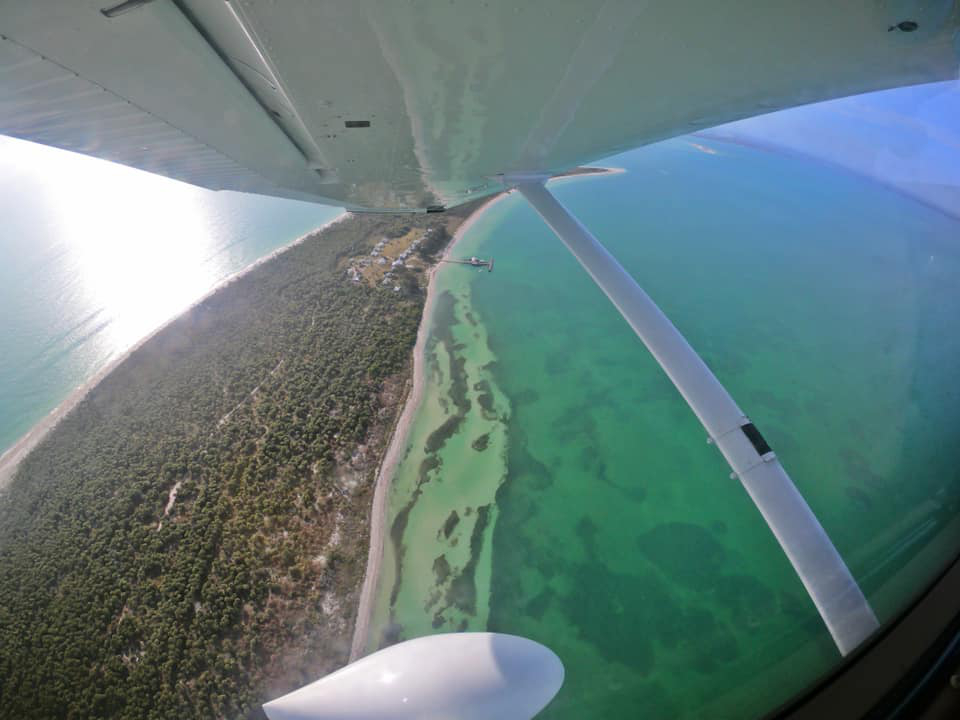
The route and views vary with weather, air traffic, and operational needs. Gulf Coast scenery may be part of the experience, but a discovery flight is not a guaranteed sightseeing route. Its real value is seeing whether you enjoy the cockpit, the learning process, and the physical sensation of flight.
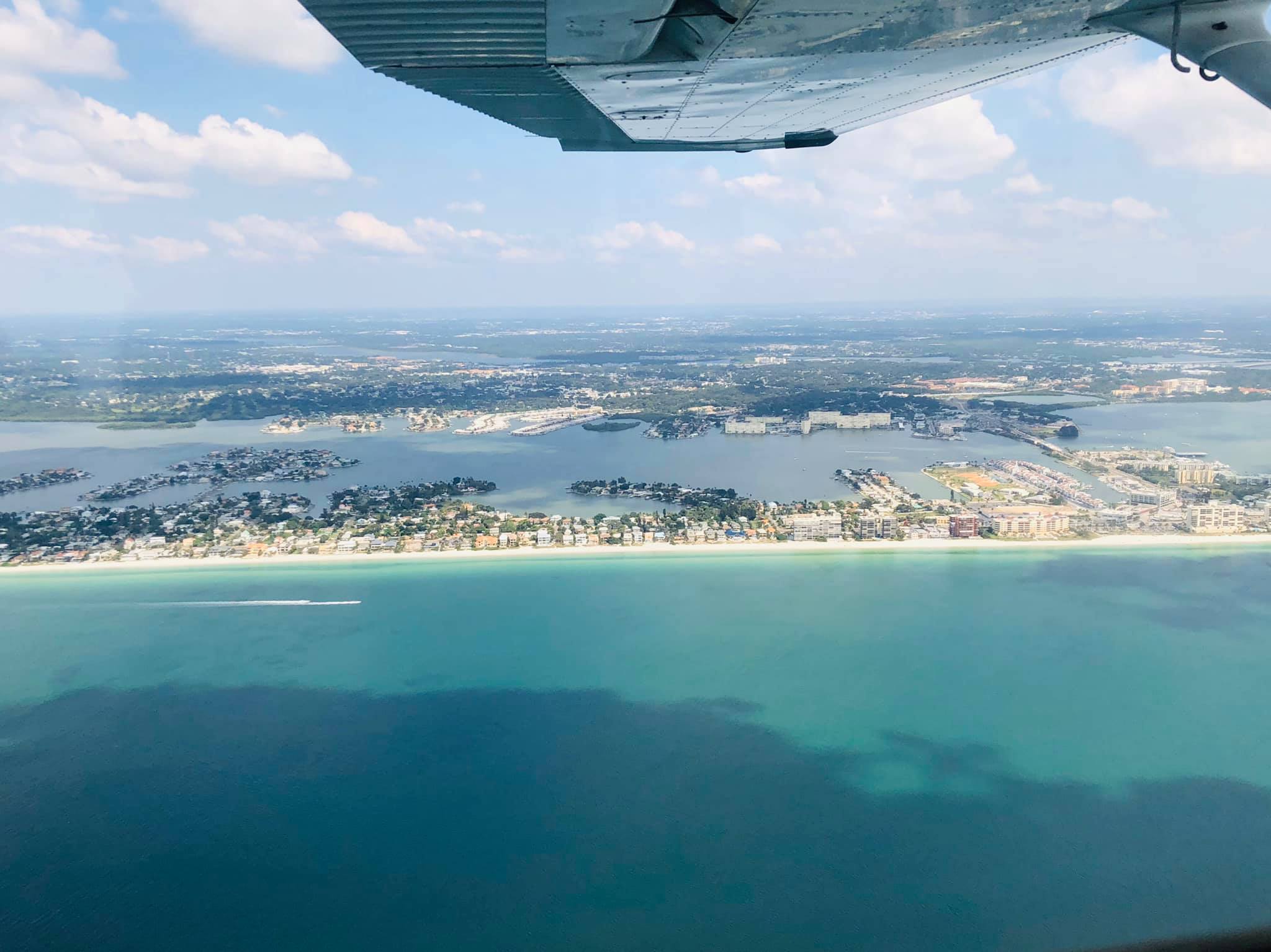
Weather, traffic, and routing shape each flight, while the cockpit experience remains the focus.
6. You Return, Land, and Debrief
As the flight returns to the airport, you can watch the instructor manage the approach, radio communication, landing, and taxi back. There is a lot happening, and you are not supposed to absorb all of it on day one.
After shutdown, your instructor will usually leave time for a post-flight conversation. This is your chance to ask:
- What felt comfortable or surprising?
- What would a first training lesson add?
- How often do students normally schedule?
- Which aircraft might fit your goals?
- What should you consider before starting?
If you are interested in continuing, the conversation can lead into the Private Pilot course. If you are still deciding, that is useful too. A discovery flight should give you firsthand information, not pressure you into making your entire aviation plan that day.
What Should You Wear and Bring?
Choose comfortable clothing and secure, closed-toe shoes that let you move easily around the aircraft. Sunglasses can be helpful on a bright Florida day. Avoid bringing bulky bags into the cockpit unless the team has told you they can be accommodated.
Current scheduling, identification, guest, and participation details can vary, so review the information provided when booking your discovery flight at SRQ. Arriving ready to listen, ask questions, and try something new matters more than studying in advance.
How Will You Know Whether the Flight Was Worth It?
The most useful result is not simply whether you loved the view. Ask yourself whether you were curious about what the instructor was doing. Did you want to understand the radio calls? Did the checklist process make sense? When the airplane responded to a small control input, did you want to try again?
Those reactions tell you more than a generic article can. A discovery flight turns an abstract goal into a real decision. It lets you evaluate the airplane, the learning environment, and your own interest from the cockpit.
For another perspective before you book, read why a discovery flight can be the right first step.
Ready to See What Flying Feels Like?
You do not have to decide your whole aviation future before your first flight. Start by meeting an instructor, seeing the airplane up close, and experiencing the view from the cockpit.
Book your discovery flight with Universal Flight Training and take your first step at Sarasota Bradenton International Airport.